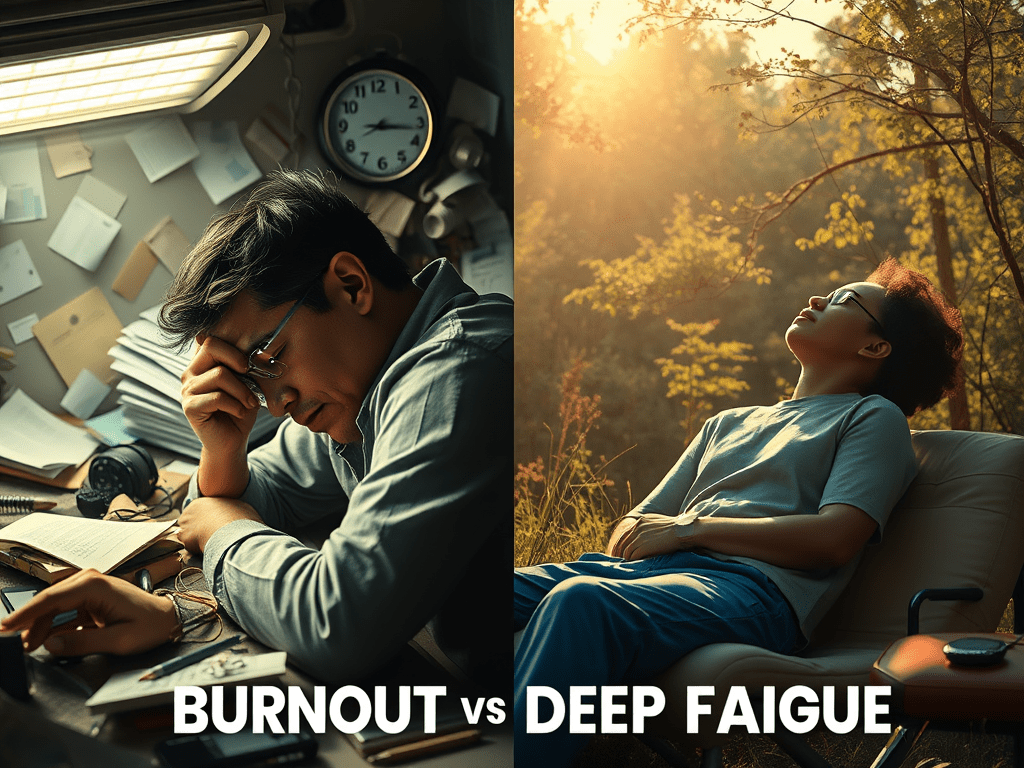
We live in a culture that praises hustle, applauds productivity, and wears exhaustion like a badge of honor. But somewhere between the late nights, the endless deadlines, and the mental fog, many people hit a wall — and it’s not always just burnout. Sometimes, it’s something deeper. Something heavier. Something modern wellness often fails to name.
Let’s talk about deep fatigue — the kind that doesn’t go away with a weekend off or a mindfulness app.
What Is Burnout, Really?
Burnout has become a buzzword in recent years, used to describe chronic stress, disengagement, and emotional exhaustion — especially in the workplace. It’s now recognized by the World Health Organization as an “occupational phenomenon,” marked by:
- Emotional depletion
- Reduced performance
- Cynicism or detachment
The common solution? Rest, boundaries, self-care routines, maybe a new job. And for some, that’s enough.
But what if the symptoms linger? What if you do all the “right things” — and still feel numb, hollow, or invisible?
Beyond Burnout: The Quiet Weight of Deep Fatigue
Deep fatigue doesn’t announce itself with dramatic collapse. It builds quietly, often after long periods of high stress, emotional suppression, caregiving, trauma, or unresolved grief. You may not even realize it’s happening — until joy becomes unfamiliar, motivation fades, and your body starts saying “no” in louder and louder ways.
Signs may include:
- Constant low-grade exhaustion, even after rest
- Emotional flatness or disconnection
- Physical symptoms (aches, tension, digestive issues)
- A sense of “running on fumes” or feeling like a shell
Unlike burnout, which is usually tied to external demands, deep fatigue often has internal roots — compounded by years of overextension and unmet needs.
Why Wellness Advice Often Falls Short
The problem? Much of modern wellness is designed for surface-level stress. It treats symptoms — not systems. It tells people to try yoga or take a break, when what they may really need is:
- Emotional validation
- Nervous system recovery
- Acknowledgment of trauma or loss
- Support in re-establishing boundaries and meaning
Self-care isn’t always about candles and meditation. Sometimes, it’s about saying no, grieving what you lost, or simply allowing yourself to be tired without shame.
So What Can We Actually Do?
There’s no one-size-fits-all answer — but if this resonates with you or someone you know, here are a few places to start:
- Name it. Sometimes the most powerful thing is just to recognize: this is deeper than burnout.
- Reclaim rest. Not just sleep — but true rest: mental, emotional, sensory.
- Seek support. Whether through therapy, bodywork, or trusted connections.
- Simplify. Deep fatigue often signals a life too full of “shoulds” and not enough spaciousness.
- Be patient. Healing from this kind of exhaustion doesn’t follow a linear path.
A Final Word
Burnout tells us we’ve pushed too hard. Deep fatigue tells us we’ve neglected ourselves for too long. It’s not weakness — it’s a signal. And if we listen carefully, it might just lead us back to wholeness.