Introduction
Across the globe, there are places so deeply protected that no visitor, no traveler, no outsider will ever cross their gates. Some are sealed by nature. Others by sacred traditions. Some by the quiet weight of political power. And some by unimaginable wealth.
The closer you get, the clearer the message: you are not welcome.
But why are these places off-limits?
And where exactly do they hide on our maps?
These are the world’s most forbidden places — not by legend, but by law, by danger, by sacred command, and by vaults that will never be unlocked.
Natural Danger Zones
Places nature itself protects or makes lethal.
North Sentinel Island — Andaman Sea, India
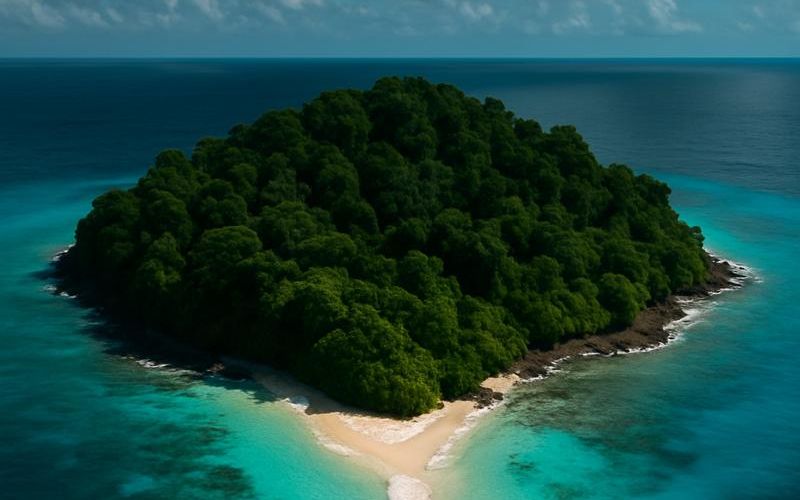
Where is it?
North Sentinel Island sits in the Bay of Bengal, within the Andaman and Nicobar Islands, a remote Indian territory southeast of the Indian mainland and west of Thailand.
Why it’s forbidden:
The island is home to the Sentinelese, one of the world’s last uncontacted tribes. They have lived in complete isolation for thousands of years. Approaching the island by boat or helicopter is not just discouraged — it is legally banned by the Indian government, which enforces a three-mile exclusion zone around the island.
The Sentinelese actively resist contact. When helicopters surveyed the island after the 2004 tsunami, they were met with spears and arrows. Outsiders who attempted illegal landings, including a missionary in 2018, have been killed on sight.
The government’s restriction isn’t a punishment. It’s a protection — both for the tribe and for modern humans. The Sentinelese have no immunity to modern diseases. A single visit could wipe them out.
North Sentinel Island remains untouched — one of the last true blank spaces on the map.
Ilha da Queimada Grande (Snake Island) — São Paulo Coast, Brazil
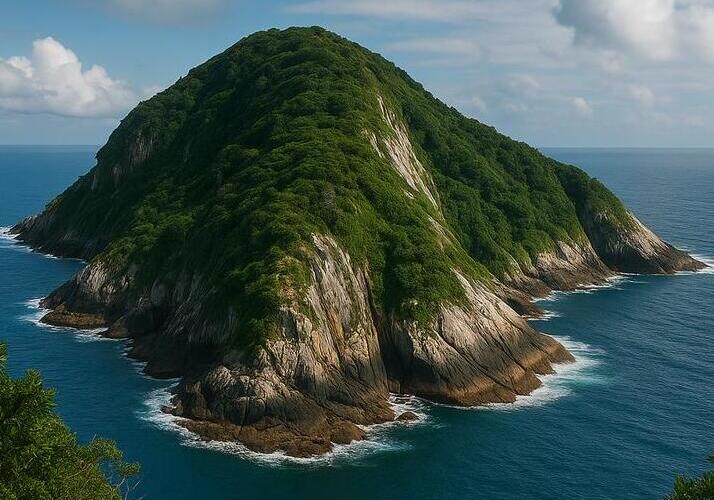
Where is it?
About 33 kilometers off the coast of São Paulo, Brazil, in the South Atlantic Ocean, lies Ilha da Queimada Grande, also known as Snake Island.
Why it’s forbidden:
This island is the only natural home of the golden lancehead viper (Bothrops insularis), one of the most venomous snakes on Earth. Some studies estimate there’s as many as one snake per square meter.
The danger is so real that the Brazilian navy has permanently closed the island to the public. Only licensed scientists with special medical teams are granted access, and even they approach with extreme caution.
Snake Island is not a place of myth. It is a living, breathing hazard. Its ban is total — a rare case where nature itself placed the lock, and the government simply obeyed.
Religious & Cultural Restrictions
Places forbidden by faith, tradition, or sacred law.
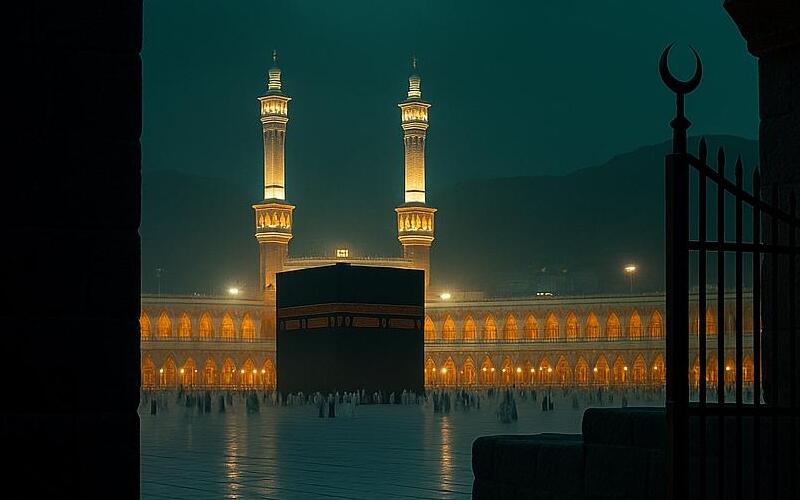
Mecca — The City of Faith, Guarded by Invisible Walls
Where is it?
Mecca, or Makkah, is located in Saudi Arabia’s Hejaz region, approximately 80 kilometers inland from the Red Sea coast and near the city of Jeddah.
Why it’s forbidden:
Mecca is the holiest city in Islam and the heart of the Hajj pilgrimage.
But Mecca is not just a city with gates — it is a sacred zone.
Non-Muslims are strictly forbidden from entering the entire city.
Signs along the highways direct non-Muslims to take other routes. Checkpoints enforce the ban, and the law is absolute.
But the forbidden boundaries go even further.
At the center of Mecca stands the Kaaba, the sacred cube-shaped building inside the Grand Mosque (Masjid al-Haram). Muslims from all over the world circle the Kaaba during Hajj and Umrah, but almost no one enters it.
The Kaaba’s doors are typically opened once a year for a rare ceremonial cleaning. Only a carefully chosen group — religious leaders, Saudi officials, and select guests — are permitted to step inside. Even most Muslims who live their entire lives in Mecca will never see the Kaaba’s interior.
So while the city of Mecca is forbidden to non-Muslims, the Kaaba itself is forbidden to almost everyone.
It stands not just as a destination, but as a place whose inner sanctum remains quietly out of reach.
Pashupatinath Temple — Sacred Gates Closed by Faith
Where is it?
The Pashupatinath Temple is located in Kathmandu, Nepal, along the banks of the Bagmati River. It is one of the most revered Hindu temples in the world and a UNESCO World Heritage site.
Why it’s forbidden:
The temple complex is open to the public, but the main temple — the sanctum housing the sacred lingam of Lord Shiva — is strictly forbidden to non-Hindus.
Guards posted at the entrances carefully check visitors. Tourists, non-Hindus, and even non-Nepali residents are not allowed inside the inner temple.
Many can walk the outer courtyards, photograph the temple grounds, or witness the open-air cremation ceremonies along the river, but the heart of Pashupatinath remains tightly sealed to anyone outside the faith.
The restriction is not political. It is spiritual, preserved by centuries of tradition that protect the sanctity of the site.
At Pashupatinath, the walls do not rise by force — they rise by belief.
Mount Ōmine — A Sacred Mountain Closed to Women
Where is it?
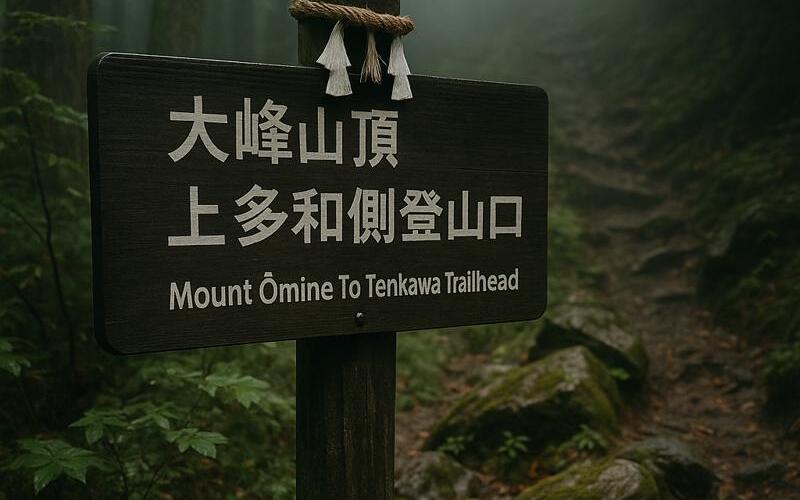
Mount Ōmine is located in Nara Prefecture, Japan, part of the Omine mountain range on the Kii Peninsula. It is a key site in the Shugendō tradition, a spiritual discipline that blends Shinto, Buddhism, and mountain worship.
Why it’s forbidden:
For over 1,300 years, women have been forbidden to enter Mount Ōmine’s sacred core, known as the Nyonin Kekkai.
The ban is enforced by temple authorities, not by government law, and is still active today.
Pilgrims who climb the mountain believe that the presence of women would disturb the spiritual purity required for their harsh ascetic practices.
Signs at the entrance to the sacred area openly declare: Women are not permitted beyond this point.
Despite global debate and occasional protests, the restriction remains unchanged, protected by religious tradition and recognized as part of the mountain’s World Heritage cultural status.
Mount Ōmine is a rare example of a gender-based boundary that still stands firmly in the modern world.
Bhutan — A Mountain Kingdom with Religious Boundaries
Where is it?
Bhutan is a landlocked country in the Eastern Himalayas, bordered by China to the north and India to the south. Its capital, Thimphu, is nestled high in the mountains.
Why it’s forbidden:
Bhutan allows visitors, but the country’s doors remain partially closed when it comes to religious freedom. Christian missionaries and public Christian worship are essentially banned.
The Bhutanese government tightly controls religious expression to preserve its Buddhist heritage and cultural identity.
Building non-Buddhist places of worship is nearly impossible without special permission. Foreign Christian clergy and missionaries are not permitted to conduct religious activities, and proselytizing is strictly forbidden.
Even Bhutanese citizens who convert to other religions often face social exclusion and local opposition.
Bhutan guards not just its mountains, but its spiritual borders. The restriction is not a headline — it is woven quietly into the way the kingdom preserves its sacred character.
Political & Secret Zones
Places forbidden by power, government, or elite control.
Google Data Centers — Global Locations, Hidden Security
Where are they?
Google’s data centers are spread across the globe, including facilities in The Dalles, Oregon (USA); Hamina, Finland; St. Ghislain, Belgium; and Changhua County, Taiwan. These locations are public in name but physically inaccessible to nearly everyone.
Why they’re forbidden:
Google’s data centers are the heart of the modern internet. They process billions of searches, store cloud files, and power many of the world’s biggest websites.
Entry to these centers is strictly controlled. Security includes biometric scanners, advanced surveillance, locked cages for server racks, and 24/7 on-site guards. Even Google employees are rarely permitted inside unless they are part of the specialized engineering teams.
While there are virtual tours online, no public visitor, journalist, or unauthorized person will ever walk through the server rooms where global data is stored.
These are the forbidden factories of the digital age — silent, powerful, and permanently sealed to the outside world.
Area 51 — The Desert Zone That Officially Doesn’t Exist
Where is it?
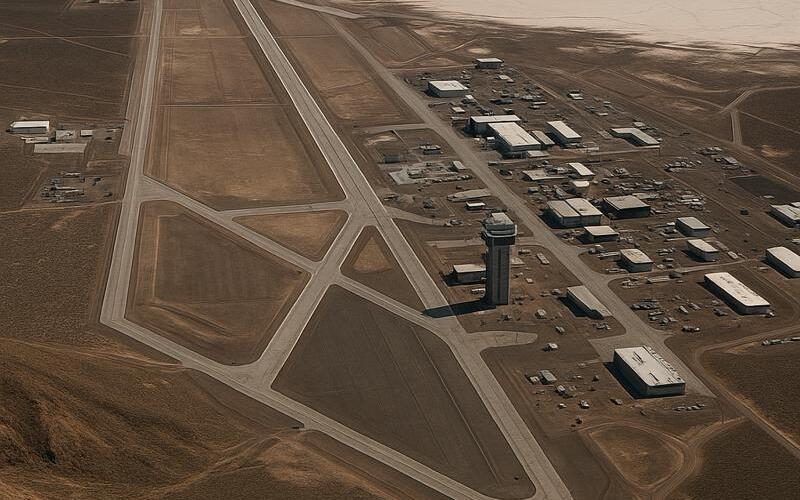
Area 51 is located in southern Nevada, United States, approximately 134 kilometers (83 miles) north-northwest of Las Vegas, near the dry Groom Lake. It sits deep within the Nevada Test and Training Range — a vast military area far from public roads.
Why it’s forbidden:
Area 51 is one of the most secure military zones in the world. The United States government officially acknowledged its existence only in 2013, after decades of secrecy.
The base is used for the development and testing of experimental aircraft and advanced defense technologies.
The public is strictly prohibited from entering. Warning signs, ground sensors, surveillance cameras, and armed security patrols make the boundaries clear. Even approaching the outer fence can lead to arrest.
For years, the secrecy of Area 51 has attracted rumors about UFOs, alien research, and reverse-engineered technology.
The truth is likely more conventional — but no outsider will ever know for certain.
Area 51 remains a blank space on civilian maps, a place whose purpose is defined by the very fact that you will never see it.
RAF Menwith Hill — The Eyes and Ears of the Sky
Where is it?
RAF Menwith Hill is located in North Yorkshire, England, about 12 kilometers west of the city of Harrogate.
Why it’s forbidden:
Menwith Hill is a British Royal Air Force station used by both the UK and the United States for global electronic surveillance and intelligence gathering. The site is famous for its distinctive white radomes — large geodesic domes that house satellite dishes.
Access is completely restricted to authorized military and intelligence personnel.
Its work is highly classified, linked to real-time communications monitoring and satellite tracking.
Despite public protests and decades of speculation, the full scale of Menwith Hill’s operations remains officially undisclosed.
Menwith Hill is not a relic of the Cold War — it is a living nerve center, quietly watching the world from behind locked gates.
Bohemian Grove — Where the Powerful Gather in Private
Where is it?
Bohemian Grove is located in Monte Rio, California, about 120 kilometers (75 miles) north of San Francisco, in a private redwood forest along the Russian River.
Why it’s forbidden:
Each summer, some of the world’s most influential men — political leaders, CEOs, and artists — gather in Bohemian Grove for a secretive retreat hosted by the exclusive Bohemian Club.
The meetings are strictly private. The club’s motto is “Weaving spiders come not here,” signaling that business deals are not to be discussed.
But the heavy security, secluded rituals, and exclusion of the public have fueled decades of conspiracy theories.
Despite public curiosity, Bohemian Grove remains one of the most inaccessible social spaces on Earth — not because of geography, but because of invitation.
Vatican Apostolic Archives — Vatican City
Where is it?
Beneath Vatican City, within Rome, Italy, sits the Vatican Apostolic Archives, formerly known as the Vatican Secret Archives.
Why it’s forbidden:
This archive holds centuries of documents, letters, and records that trace back over 1,200 years. The name “secret” historically meant “private,” but the mystery remains intact.
Only a limited number of qualified scholars, approved by the Vatican, are allowed inside. Even they must specify exactly which documents they wish to consult and are only granted limited time and access.
Most of the content stored inside has never been seen by the public. It is said to contain papal communications, royal decrees, scientific disputes, and perhaps records that could reshape our understanding of history.
The walls are silent, and the keys are few. For most, these doors will never open.
North Korea — The Nation of Locked Borders
Where is it?
North Korea, officially the Democratic People’s Republic of Korea (DPRK), lies in East Asia, occupying the northern half of the Korean Peninsula. It shares land borders with China, South Korea, and a small section with Russia.
Why it’s forbidden:
North Korea is not just home to restricted areas — the entire country operates as one of the world’s most controlled environments. Foreign visitors can only enter through pre-approved tours, with government-assigned guides. Independent travel is impossible. Movement is strictly supervised, and photographing anything outside designated areas can lead to arrest or expulsion.
For North Korean citizens, the forbidden zones are even closer to home. There are entire regions, border zones, and military compounds that most North Koreans themselves cannot access. Even approaching certain roads without a permit can lead to severe punishment.
There are cities, factories, and camps that the outside world will likely never see in full detail.
In North Korea, the forbidden is not a site — it is a system that controls where you can stand, where you can look, and where you can think you’re allowed to go.
Mogao Caves (Restricted Areas) — Gansu Province, China
Where is it?
The Mogao Caves are located near the oasis town of Dunhuang, along the ancient Silk Road in Gansu Province, China.
Why it’s forbidden:
The Mogao Caves house some of the most delicate and valuable Buddhist murals and manuscripts in the world, some dating back over 1,500 years.
Although several caves are open to visitors, the most precious chambers — those with the oldest paintings and manuscripts — are permanently sealed to the public. Even authorized researchers must pass strict government and conservation approvals to enter these restricted areas, often for very limited periods.
This is not simply a matter of preservation. The Chinese government closely monitors access to certain cultural relics, especially those tied to historical trade routes and religious movements.
In China, some doors are closed by time, others by the quiet hand of modern guardianship.
Closed Cities — Russia’s Hidden Towns
Where are they?
Across the vast territories of Russia, there are dozens of zakrytye goroda — closed cities — which were established during the Soviet era for nuclear research, weapons development, and military production.
These cities still exist today, including places like Zheleznogorsk in Siberia, Severodvinsk on the White Sea coast, and Sarov, the birthplace of the Soviet nuclear bomb.
Why they’re forbidden:
These cities are not accessible to the public. Foreigners are completely barred, and even Russian citizens need special security clearance to visit or work inside.
Most closed cities are hidden behind checkpoints, fences, and armed security, and many are not listed on standard public maps. They function like isolated bubbles — entire communities sealed off by state power.
Even mail and communications from these cities are tightly controlled.
Russia’s closed cities are not historical ruins — they are living places, operating quietly, beyond the reach of the world.
Global Wealth Vaults — The Most Sealed Financial Spaces on Earth
Places where the world’s wealth is locked behind walls no one can pass.
Federal Reserve Bank Gold Vault — New York, USA
The Deepest Gold Vault Most Will Never See
Beneath the Federal Reserve Bank of New York, hidden almost 25 meters below street level and even below the city’s waterline, lies one of the largest known gold reserves on Earth.
This is not a museum vault or a symbolic storage room — this is a real, functioning financial fortress. The vault holds gold bars from nations, international banks, and private institutions. The public cannot access this space under any circumstance. Even most Federal Reserve employees will never see the vault in their lifetime.
It is protected by 90-ton steel doors, advanced biometric systems, and armed security. The structure is so deep that it is anchored to the bedrock of Manhattan.
No one enters freely. The paths, security layouts, and vault mechanisms remain undisclosed to the public.
It is not just a vault — it is a sealed basement of the global financial system.
Bank of England Gold Vault — London, UK
The Bomb-Proof Fortress Beneath London
Beneath the quiet streets of London sits one of the most protected gold storage facilities in Europe — the Bank of England Gold Vault.
It holds more than 400,000 gold bars on behalf of the UK government and other central banks worldwide. The vault is protected by bomb-proof reinforced doors and an intricate system of biometric voice verification locks.
There are no public tours. No public images of the vault interior. No casual visits from even senior staff.
Only a handful of people hold the clearance to cross these walls.
The exact blueprint, emergency escape routes, and security layers are classified under national security protocols.
It is one of the most unbreachable financial spaces in the modern world.
Swiss Diamond Vaults — Zurich, Switzerland
The Private Wealth No One Can Trace
Deep beneath Zurich’s secure banking district and within specialized freeport facilities, Swiss diamond vaults store some of the world’s most discreet and valuable assets.
These vaults hold diamonds, art, rare commodities, and unregistered assets under some of the strongest privacy laws in the world.
Many of these vaults are intentionally located in freeports within international airport zones, where customs inspections can be legally avoided. The ownership records are often shielded by extreme levels of confidentiality, making these vaults almost impossible to trace through public financial records.
Access is forbidden to the public, journalists, and even many bank employees. Only select security officials, high-level asset managers, and private key holders are permitted inside.
These are not just storage rooms. They are vaults that quietly erase the financial footprints of the world’s wealthiest clients.
IMF Gold Holdings — Locations Unknown
The Global Gold Reserves Without an Address
The International Monetary Fund holds over 2,800 metric tons of gold. Some of this gold is believed to be stored within the Federal Reserve Bank of New York and the Bank of England, but the IMF has never disclosed the full list of storage sites.
Even IMF staff typically have no physical access to the vaults. The official security arrangements and storage facilities are protected by agreements that are not publicly available.
The IMF gold exists, it is counted, but its walls, doors, and vault maps are hidden from the world.
It is perhaps the only major gold reserve on Earth that physically exists, yet remains largely invisible to all but the highest financial authorities.
Fort Knox — Kentucky, USA
The Most Guarded Gold Vault in the World
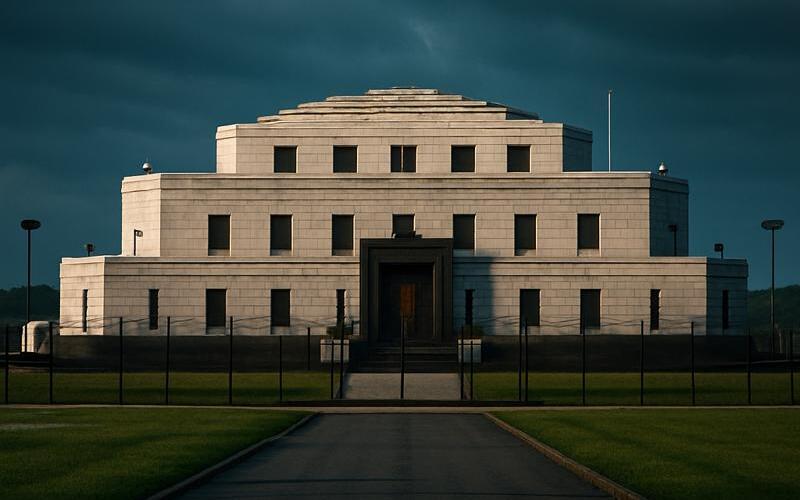
Fort Knox is the United States Bullion Depository — a fortified military installation that holds a portion of the U.S. gold reserves.
The site is protected by the U.S. Army, layers of razor wire, minefields, armed guards, and some of the world’s most classified security measures. Even top government officials, including members of Congress, are rarely allowed to visit.
The vault’s construction includes steel-reinforced granite walls, blast-proof doors, and multiple combination locks held by different individuals.
No single person knows all the codes and mechanisms required to access the vault.
Fort Knox is not a legend. It is real — and it stands as the global symbol of impenetrable wealth.
It is the gold vault that has become the gold standard of secrecy itself.
Final Thoughts
The world still holds doors we cannot open. Some are guarded by armies. Some by sacred traditions. Some by nature itself. And some are sealed by wealth and power — closed not by walls, but by silence.
There is a deep human instinct to cross those lines — to chase what is forbidden, to reach what is hidden. But perhaps their power comes from being forever beyond our reach.
Some places are closed to protect life. Others to protect faith. Some to protect secrets. And some to protect treasures we may never see.
In an age where information flows without borders, these places remind us that not everything is meant to be touched — and not every door should be opened.