Travel promises equality.
One ticket. One room. One beautiful destination.
But the reality?
Two people can book the same hotel, board the same flight, or take the same cruise — and walk away with entirely different treatment.
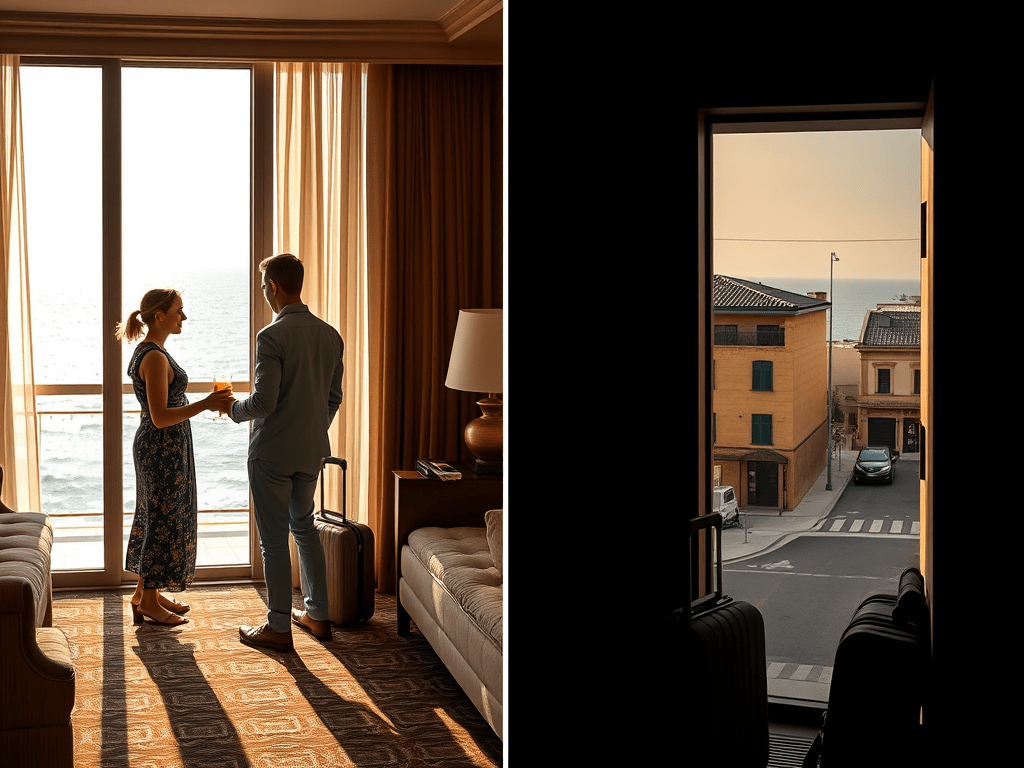
One is offered wine and an upgrade.
The other gets rules, suspicion, and less than what was promised.
This isn’t an accident.
It’s a pattern.
And it’s happening around the world.
Hotels That Quietly Sort You
In Istanbul, hotels often ask for extra ID or deposits — but only from travelers coming from the Middle East or North Africa.
In Cairo, some guests report being given worse rooms despite paying more — simply because they booked independently, not through a Western travel agency.
In Bangkok, travelers from Europe often receive early check-in and better rooms. Meanwhile, Southeast Asian guests report being given rooms near elevators or broken fixtures — even when paying the same.
In cities like Prague, Marrakech, and Athens, reviews echo the same quiet injustice:
- “They told me I didn’t book the sea view — but I did.”
- “My friend and I booked together. She got a luxury room. I got the basement.”
- “They told me to speak to the agency. No one fixed it.”
The message is subtle — but clear: Not all guests are treated equally.
Flights Where the Seat Isn’t Just a Seat
In London, a traveler flying to Croatia selected a front-row seat online. But at check-in, they were moved to the back — “for operational reasons.” Their friend, who booked cheaper via a third-party app, got a better seat.
On routes from Paris to Morocco, certain nationalities report older aircraft and stricter baggage rules — despite holding the same ticket class.
In Canada, passengers have reported different service tones based on surname or ID region.
The plane is the same. But how you’re treated on board is not.
Cruises That Reward the Ones Who Ask Less
In Venice, cruise ships were restricted in 2021 due to environmental damage — but continued bringing high-volume visitors who spent little locally.
In Greece, travelers on the same cruise ship report:
- Same room type, different perks
- Same price, different access to spa or meals
Those who booked via local agencies often got more, while direct online bookings got less.
In Dubai, luxury cruise guests from certain regions reported being quietly moved from lounges — based on assumed booking tier or origin, not behavior.
The Invisible Menu: How Cities Serve Tourists by Category
In Florence, restaurants often serve reheated food in back rooms to large tourist groups, while offering freshly prepared meals to smaller, “higher-value” diners.
In Tokyo, Japanese-speaking locals receive full menus and better portions. English-speaking tourists? A simplified card with fewer options.
In Marrakech, one local couple and one foreign couple entered the same restaurant. One was seated on the rooftop with a view. The other — next to the kitchen, no explanation.
Same city. Same dish. Different dignity.
Real Story: What Happened in Cancun?
A traveler from Canada booked a premium vacation to Cancun expecting seamless service.
But no driver was at the airport. They had to join a tourist group they didn’t book with — who had paid less for the same hotel and flight.
At check-in, their room faced a back road far from the beach. The hotel promised a room change — after 3 days, when only 2 nights would remain.
A paid day trip offered no meal, something hidden in the fine print. Hours passed without food.
The trip ended in frustration, silence, and unresolved claims.
The traveler never returned.
Global Case: This Isn’t Just a Feeling — It’s Policy
In Amsterdam, city officials launched targeted ads to discourage British party-goers. Searching “Amsterdam stag do”? You’d get a pop-up:
“You’re not welcome here.”
In Barcelona, hotel staff are instructed to group “high-risk” guests — such as party tourists — onto specific floors to protect quieter guests.
This is not paranoia.
It’s public tourism policy.
Real Cases: Still Happening in 2023–2024
Even as awareness rises, unfair tourist treatment hasn’t stopped — and the evidence continues to surface:
• New York City (2023): Several foreign travelers reported being charged “extra fees” at hotel check-in, despite prepaid confirmations. Staff claimed “local regulations” required added deposits — but American guests didn’t receive the same instructions.
• Bali (2023–2024): Ocean-view cafés in Canggu and Uluwatu were found to reserve front-row tables for influencers or European guests, while Southeast Asian travelers were directed toward interior seats.
• Lisbon (2024): Tourists booking top-rated Airbnbs were told to enter through back alleyways — while locals or guests from partner agencies used the main entrance.
• Cairo (2024): Middle Eastern tourists visiting luxury resorts reported stricter dress codes at pools and restaurants compared to Western tourists at the same property.
• Barcelona (2023): Reports emerged of taxi drivers refusing passengers based on language or assumed nationality, particularly around the cruise terminal and central plazas.
These aren’t isolated incidents. They’re part of a quiet structure that rewards familiarity — and punishes the unfamiliar.
This is not history. It’s now.
And Then There’s You
You packed early.
You paid fully.
You expected peace — and received policies.
You brought good intentions — and were handed the leftovers of someone else’s bad reputation.
You weren’t rude.
You weren’t loud.
You weren’t late.
But the system didn’t know that — or didn’t care.
Cities That No Longer Say Yes to Everyone
- Venice now charges entry.
- Dubrovnik limits cruise groups.
- Kyoto discourages influencers.
- Hallstatt (Austria) asks tourists to stop coming altogether.
Locals say:
“We welcome guests. But we’re done being a backdrop for disrespect.”
It’s not about money.
It’s about existence.
When One Reputation Affects Millions
Sometimes it’s not you — it’s what others before you did.
In 2023, Canadian authorities quietly restricted flight paths from certain countries after thousands of tourists overstayed visitor visas. While most travelers were genuine vacationers, a pattern of abuse reshaped how entire nationalities are screened.
In Italy and Spain, locals now associate certain tourist groups with noise, drunken behavior, or disrespect for cultural sites — leading to stricter rules or higher booking thresholds for all.
In Japan, “tourist manners” signs have appeared in Kyoto, not just in English — but targeting specific visitor languages after repeated etiquette complaints.
One person’s rudeness becomes your burden.
Your politeness may still be met with suspicion.
And your travel experience suffers for someone else’s past.
It’s unfair.
But it’s real.
So What Can You Do?
How to Travel Better — and Be Treated Fairer
You can’t change the system alone.
But you can change how you walk through it.
Here’s how:
1. Document Everything
Always save screenshots of:
- Hotel room view, perks, and confirmations
- Seat maps on flights
- Transfer schedules
- Tour inclusions (like meals or guide language)
This helps stop denial later.
2. Book Direct When Possible — and Confirm in Writing
If booking via a platform:
- Email the hotel/airline directly
- Confirm preferences like room location or check-in time
Silence signals passivity.
3. Speak Early — and Clearly
Ask at arrival:
- “Can you confirm this is the sea-view room I booked?”
- “Is this the same room class and rate I paid?”
A simple question can avoid 3 days of regret.
4. Read Reviews from Your Region
Hidden patterns appear when reading:
- Your country’s travel forums
- Comments in your language
- Social posts by guests like you
This isn’t bias — it’s insight.
5. Leave Public Feedback (Calm, Not Cruel)
Post on:
- TripAdvisor
- Facebook reviews
Be factual, fair, and include screenshots.
Your words may save someone else from being quietly mistreated.
Examples 2024–2025: What’s Still Changing
The tourism world is evolving — but not always for the better:
• Mykonos (2025): Beach clubs now publicly list two price levels — one for locals, another for tourists — with no explanation.
• Tulum (2025): Some boutique hotels offer yoga classes and welcome drinks only to guests who book through select U.S.-based influencers.
• Paris (2024): Reports show some small hotels display “fully booked” notices online — but accept walk-in guests from Europe or North America.
• Tokyo (2025): A new app guiding international tourists through subway etiquette was criticized for portraying only certain groups as “problem guests.”
In a world chasing luxury and revenue, fairness is still falling behind.
Final Thought
We may not control how others judge us.
But we can control how we carry ourselves — and what we accept.
The future of tourism will be shaped by what you allow and what you challenge.
Because travel is one of the world’s great joys.
Just don’t forget:
So are you.
This article reflects observed travel patterns and anonymous case reports. It is intended for informational and cultural discussion purposes only.
Read More on Curianic
If this article resonated with you, you may also find these insights worth exploring:
- Passports of Privilege: How the Wealthy Use Stepping-Stone Countries to Access the West
Explore how global elites use second citizenships and passport rankings to bypass the very travel barriers others face daily. - Top Tourist Destinations with Hidden Risks for Women and Families (2025 Guide)
Safety isn’t equal — even in the world’s most popular vacation spots. This guide breaks the silence. - What We Learn When We Cross Borders — Lessons That Stay
A powerful reflection on identity, perception, and the moments that reshape us during travel.