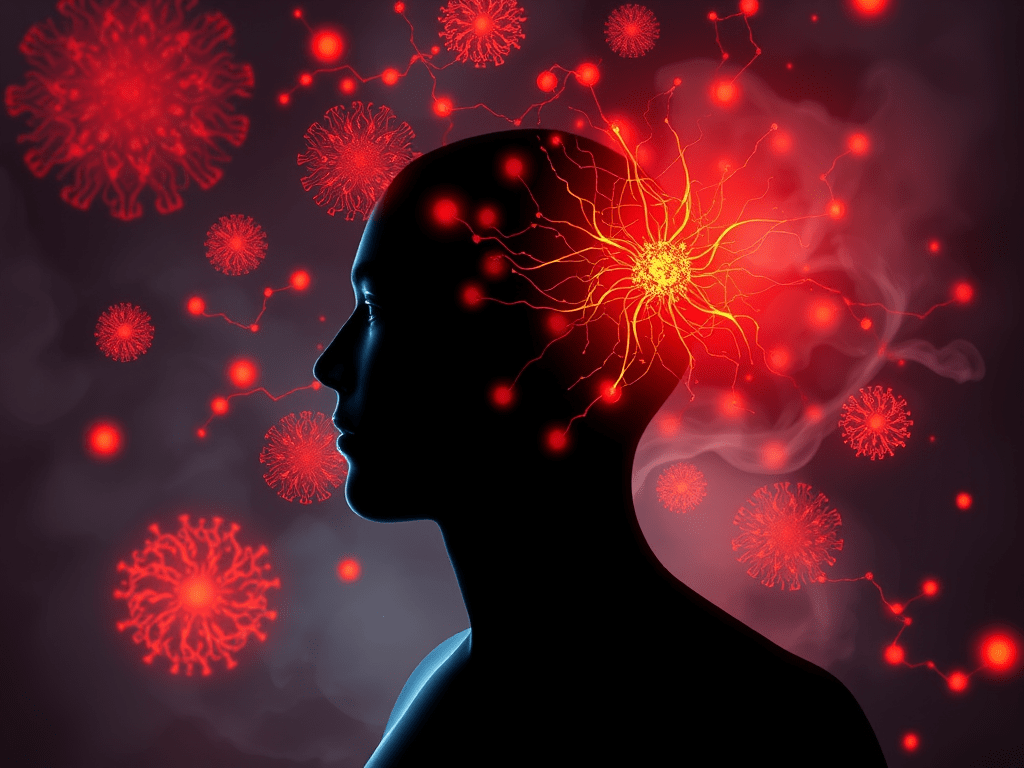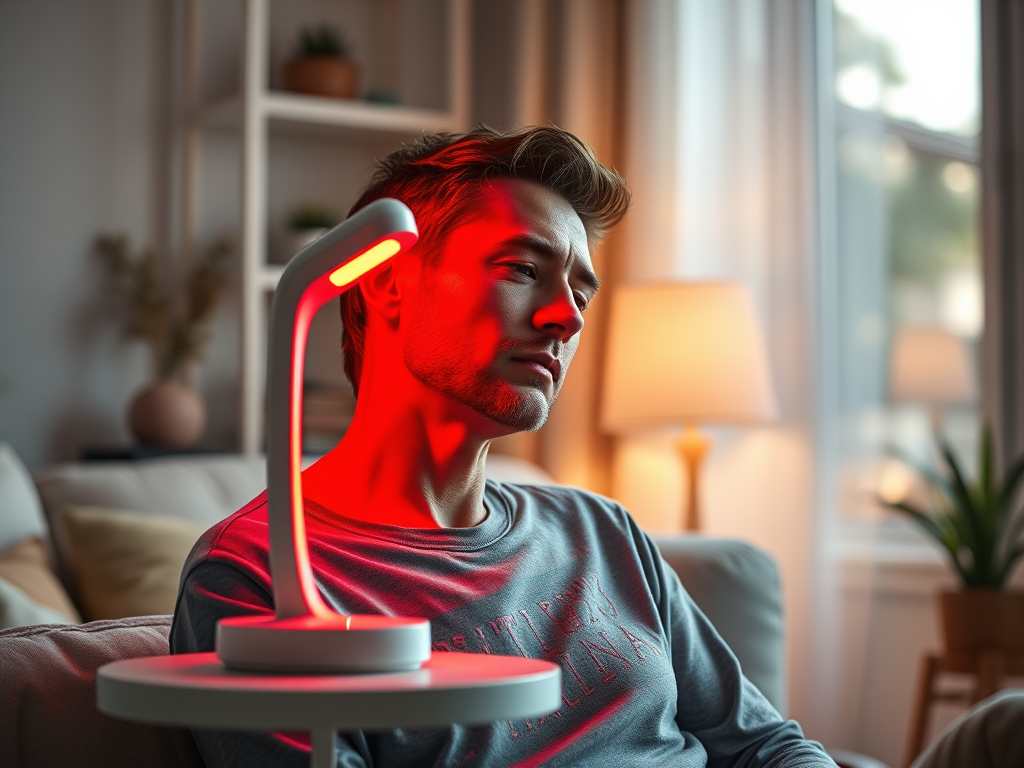
Red light therapy for nerve pain, migraine, and stress relief is re-emerging as a non-drug option for people struggling with chronic conditions or recovery after surgery. In one clinic, a surgeon kept a red lamp not only for his patients but also for himself. When stress or nerve pain struck, he closed the door, sat under the light for 15 minutes, and let the glow calm his body. Later, when medication failed to ease a patient’s persistent migraine and facial pain, he offered the same simple method: “Close your eyes, let the light face the pain, and rest.”
What once seemed like an old-fashioned routine is supported by research. Studies show that red light therapy can help damaged nerves recover after dental surgery, ease symptoms of diabetic neuropathy, reduce migraine pain, and provide safe stress relief—both in professional care and at home.
How Red Light Works on the Nervous System
Red and near-infrared light (630–830 nanometers) penetrate through skin and soft tissue, reaching nerves and blood vessels. Unlike heat lamps or UV light, this is not about warming tissue or tanning. The effects are biological and occur deep at the cellular level:
- Mitochondrial boost: Light stimulates mitochondria—the “engines” of cells—to produce more ATP (cell energy). Damaged nerves, starved of energy, can begin repairing themselves.
- Nitric oxide release: Red light helps release nitric oxide, which improves blood circulation around nerves. Better blood flow means more oxygen and nutrients for healing.
- Anti-inflammatory action: Nerve pain often comes from inflammation. Red light calms these signals, reducing swelling and pain transmission.
- Axonal regeneration: Early studies suggest light encourages nerve fibers (axons) to regrow and reconnect after injury.
In short: red light therapy helps nerves recover at the cellular level, where medications often only mask symptoms.
But biology alone is not enough—what matters is whether these effects translate into real recovery for patients. Over the past decade, clinical studies have tested red light therapy across different types of nerve pain, from facial injuries to migraines and diabetic neuropathy. The evidence offers a clearer picture of how these mechanisms work in practice.
Evidence from Research
Facial and Dental Nerve Injury
Dental surgeries, such as wisdom tooth extractions or implants, sometimes damage the inferior alveolar nerve (IAN) or branches of the trigeminal nerve, leaving patients with pain or numbness.
A 2023 meta-analysis in PLOS ONE (15 studies) found that photobiomodulation significantly improved recovery after dental and jaw surgeries that injured facial nerves—especially when therapy continued for more than 30 days.
Clinical reports also describe patients regaining sensation and experiencing reduced pain after consistent red light sessions. This makes PBM one of the few non-drug options with measurable impact on post-dental nerve damage.
Trigeminal Neuralgia and Orofacial Pain
Trigeminal neuralgia is among the most severe forms of nerve pain. Traditional treatment relies heavily on medication or surgery, but results are often limited.
A 2024 randomized trial in the Journal of Clinical Medicine showed red and near-infrared laser therapy reduced pain intensity and improved daily function in trigeminal neuralgia patients.
Systematic reviews also show effectiveness for temporomandibular disorders (TMD) and other orofacial neuropathic pain conditions.
Migraine Relief
Migraines involve not just headaches but also nerve hypersensitivity, blood vessel changes, and stress overload. For many, medications provide only partial relief.
Early studies suggest near-infrared red light therapy may reduce migraine frequency and intensity. Clinical reports note that short sessions of red light exposure (15–20 minutes) can calm nerve overactivity, reduce sensitivity, and improve relaxation. While more research is needed, migraine patients are increasingly exploring red light therapy as a safe, complementary option.
Red Light Therapy for Body and Back Nerve Pain
Chronic nerve pain often extends beyond the face, affecting the back, legs, and other parts of the body. Many people live with persistent musculoskeletal discomfort caused by nerve irritation, inflammation, or injury.
Clinical studies suggest that red and near-infrared light can reduce chronic low back pain and related nerve pain by improving circulation and calming inflammatory signals. Patients with neuropathic pain also reported less burning, stabbing, and tingling after several weeks of consistent sessions.
This makes red light therapy a promising complementary approach for widespread body pain—particularly in cases where medication provides only partial relief.
Diabetic Peripheral Neuropathy
One of the most common systemic causes of nerve pain is diabetes. Millions of patients live with burning, stabbing, or numb sensations in the feet and legs due to peripheral neuropathy.
A 2023 systematic review in Current Diabetes Reviews found that red light therapy improved both pain intensity and nerve conduction in diabetic patients. This suggests that photobiomodulation may support not only symptom relief but also functional recovery of damaged nerves.
Unlike standard drugs, which mainly block pain signals, red light appears to enhance nerve health at the cellular level.
Mechanisms Summarized
Across these studies, the effects are consistent:
- More cellular energy: damaged nerves regain the power to repair themselves.
- Improved circulation: oxygen and nutrients reach injured tissue more effectively.
- Lower inflammation: pain signals are reduced at the source.
- Nerve repair over time: fibers gradually regrow, reconnect, and restore sensation.
Why Red Light Disappeared
If it works, why isn’t it everywhere? The answer is economic. Light cannot be patented. Unlike pharmaceuticals, it does not generate billions in revenue.
As medicine modernized, low-cost, non-patent treatments like red light were overshadowed by drugs and machines. Yet some professionals quietly continued to use red lamps in their practice—not because it was fashionable, but because it worked.
How to Use Red Light at Home
For Stress and Daily Pain Relief
- Use a red LED desk lamp (not a heat lamp, not UV).
- Sit in a quiet room, close the door, and dim other lights.
- Position the lamp to shine on the area of pain (jaw, face, neck, or back).
- Close your eyes and relax for 15–20 minutes.
- Repeat as needed during stressful or painful episodes.
This simple habit, used privately by some professionals, often provides noticeable relaxation and pain relief.
For Nerve Recovery (Longer-Term Use)
If the goal is not just relaxation but nerve healing, devices matter.
- Look for panels or lamps that specify 630–660 nm (red) or 800–830 nm (near-infrared).
- Choose products that publish power density (mW/cm²) and dose (J/cm²).
- Research suggests 4–10 J/cm², applied 2–3 times per week, for at least 4–8 weeks.
- Protect your eyes: do not look directly at the lamp, and consider safety glasses.
Safety and Caution
- Generally considered safe when used correctly.
- Side effects are rare: mild redness or irritation.
- Avoid direct eye exposure.
- Consult a doctor if you have epilepsy, photosensitive conditions, or are taking photosensitizing medication.
Conclusion
Red light therapy is not a replacement for modern medicine, but it offers something unique: healing at the nerve level, not just symptom masking.
For conditions like dental and facial nerve injuries, trigeminal neuralgia, migraines, diabetic neuropathy, and stress, the evidence shows promising results. Professionals who still use it quietly do so for a reason. For patients, rediscovering this method may mean the difference between pain managed and pain truly relieved.
FAQ: Red Light Therapy for Nerve Pain and Stress
Does a desk lamp really work?
A simple red desk lamp can provide relaxation and short-term stress relief, but it is not strong enough for nerve recovery. Clinical studies on nerve healing use devices with specific wavelengths (630–660 nm red or 800–830 nm near-infrared) and controlled doses.
How long until results appear?
Some people feel calmer or less tense after one session. For nerve recovery, however, consistent use is needed. Studies on dental nerve injury showed measurable improvement only after 30 or more days of repeated sessions.
Can it help after dental surgery?
Yes. Multiple studies confirm that red light therapy supports recovery of facial nerves injured during dental extractions or implants, improving both sensation and pain levels.
What about diabetic nerve pain?
Clinical reviews show red light therapy can reduce burning, tingling, and stabbing pain in diabetic neuropathy while improving nerve conduction. It is not a cure but offers a safe, drug-free way to manage symptoms.
Does it help with migraine?
Emerging research suggests red light therapy may reduce migraine frequency and intensity. Patients report relief after short sessions, especially when therapy is used regularly, though larger studies are still needed.
Is it safe for children?
Generally safe when used correctly, but always under supervision. Children’s eyes are more sensitive, so direct exposure to the lamp should be avoided and protective eyewear is recommended.
Can it replace medication?
No. Red light therapy should be viewed as a complementary method. While it may reduce reliance on pain medication, it does not replace prescribed medical treatment.
Read More from Curianic
Explore more articles on cognitive health, stress, and the nervous system:
- Silent Signs of Stroke: Early Warnings You Must Never Ignore to Protect Loved Ones
- Burnout vs. Deep Fatigue: What Modern Wellness Often Misses
- When Everything Feels Cloudy: Brain Fog, Vision Haze, and the Echoes We Rarely Talk About
- Where Are My Keys? Why We Keep Losing Things in Plain Sight — and Who Keeps Finding Them