The Cold War Reloaded
The Cold War never truly ended. It simply shifted shape.
Where once nuclear weapons and space rockets defined the rivalry between superpowers, today algorithms, chips, and data are the new weapons of choice. Artificial intelligence is no longer a neutral tool — it is the battlefield of our time. At the same time, it has become the frontier of geopolitical struggle, a silent arms race transforming battlefields, economies, and even culture.
The stakes are higher than most realize. AI is not just a research field. It is the nervous system of global power. Whoever dominates AI controls not only military force but also trade, communications, propaganda, and the rules of digital life.
Unlike nuclear weapons, which were confined to a few states, AI is everywhere. Governments, corporations, and even small startups can wield it. This makes the contest both more open — and more dangerous.
Welcome to the AI Cold War of 2025
From Missiles to Machines: The Evolution of Supremacy
The 20th century’s Cold War was measured in missile silos and nuclear stockpiles. Today, power is measured in semiconductors, patents, and cloud computing capacity.
- The United States remains the global leader in advanced chips, cloud infrastructure, and AI research, with firms like OpenAI, Google, Microsoft, and NVIDIA.
- China has poured billions into AI, building surveillance states at home, digital Belt and Road projects abroad, and military AI systems for regional dominance.
- Russia, while weaker economically, prioritizes military and cyber AI — drones, disinformation, and hacking units.
- India emerges as a swing state, with huge talent reserves and ambitions to become the third-largest AI economy.
- Europe may lack chip giants but uses regulation to shape the rules of the AI game.
- Canada offers world-class researchers and policy leadership, acting as a bridge between blocs.
- Israel, Iran, Turkey, and the Gulf states bring regional rivalries into the AI arena, exporting drones, hacking tools, and AI-powered surveillance.
- Japan, South Korea, and Australia anchor the Asia-Pacific frontlines, providing chips, robotics, and defense integration.
This is not a two-player race. It is a global chessboard, with dozens of pieces moving at once.
The New Weapons of Power
1. Military AI
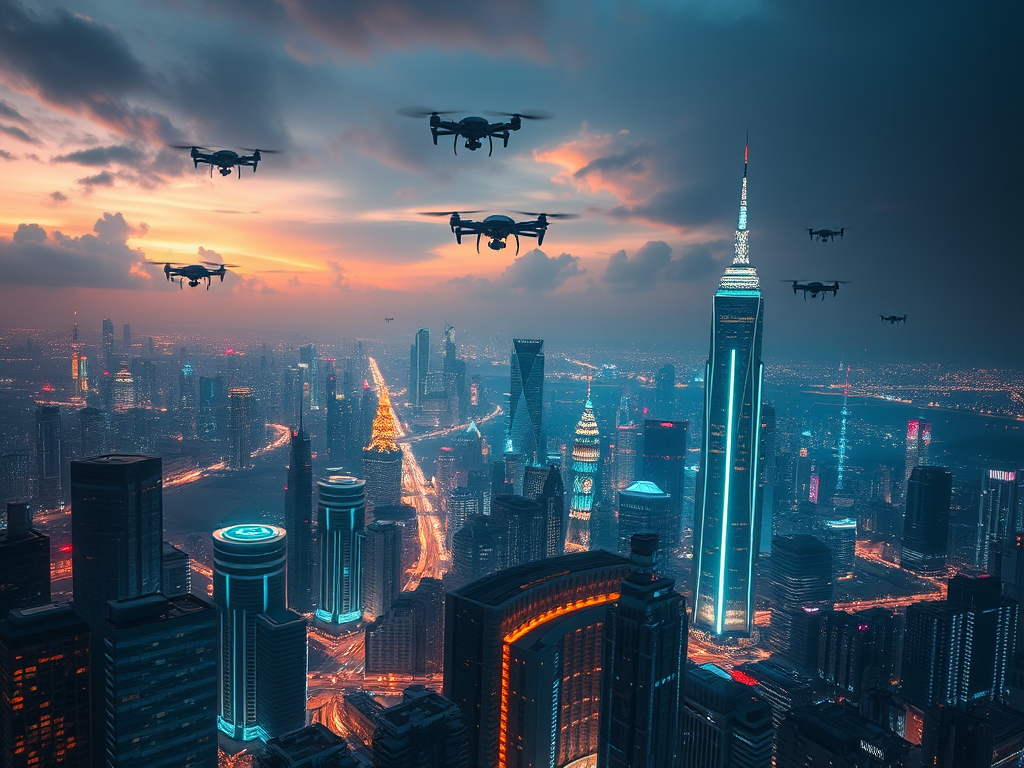
AI is changing war itself.
- Autonomous drones: swarms that can strike without human pilots.
- AI-targeting systems: analyzing surveillance feeds in seconds.
- Predictive warfare: algorithms anticipating troop movements before they happen.
Israel’s drone exports, Turkey’s Bayraktar systems, and Iran’s armed UAVs show how AI-driven weapons spread far beyond superpowers, shifting the balance in regional conflicts.
2. Cyber AI
Cybersecurity is now AI versus AI.
- Offensive AI can probe networks automatically and launch precision cyberattacks.
- Defensive AI can detect anomalies faster than humans.
- Russia and Iran are already testing AI in cyber warfare, while Israel and the U.S. build defensive fortresses.
The risk? Collateral damage — a cyberattack meant for one nation’s grid could plunge global supply chains or hospitals into chaos.
3. Propaganda AI
The old Cold War used radio broadcasts. The new one uses deepfakes and generative AI.
- AI-crafted propaganda can flood elections with fake news.
- Deepfake leaders can issue false statements, sparking panic.
- Social media armies powered by algorithms can polarize societies.
China, Russia, and Iran deploy information campaigns, while democracies struggle to defend truth itself.
4. Infrastructure AI

Every empire rests on infrastructure. For AI, that means:
- Semiconductors: Taiwan’s TSMC, South Korea’s Samsung, and U.S. fabs are the oil of the digital age.
- Cloud servers: concentrated in the U.S. and China, but spreading to Gulf states.
- Undersea internet cables: physical choke points that carry 95% of global traffic.
Control over these systems is as decisive as nuclear missiles once were.
Collateral Damage: Who Gets Caught in the Middle?
Smaller Nations in the Crossfire
Most nations lack their own AI industry. Instead, they rely on imported software and hardware, making them dependent — a form of digital colonization.
The Inequality Gap
AI may create wealth, but it deepens divides. Wealthy nations invest billions in R&D. Poorer nations risk becoming consumers, not creators, locked into foreign technologies.
Civilian Costs
Authoritarian states deploy AI for population control: facial recognition, predictive policing, censorship. Citizens everywhere face a future of permanent algorithmic surveillance.
The Next Frontlines of the AI Cold War
Semiconductors: The New Oil
Without chips, there is no AI. Export bans, sanctions, and stockpiling have turned semiconductors into weapons of policy. Taiwan — with TSMC’s dominance — is the epicenter of this high-tech battlefield.
AI Alliances
- The U.S. bloc: United States, Japan, South Korea, Australia, NATO allies.
- The China bloc: China, Russia, Iran, parts of Africa and Asia tied to its Belt and Road digital projects.
- The Middle ground: India, Gulf states, and some Southeast Asian nations seek autonomy, selling AI services to both sides.
Talent Migration
AI researchers are the new nuclear physicists. Nations compete for talent through visa programs, research grants, and national AI institutes. Canada, India, and Europe are major battlegrounds for this intellectual competition.
Regional Players: Beyond the Superpowers
Europe
The EU has little hardware capacity but is a regulatory superpower. Its AI Act could force global companies to follow European standards, just as GDPR did for data privacy.
Canada
Though lacking fabs, Canada is a birthplace of modern AI (deep learning pioneers Hinton, Bengio, Sutton). It co-founded the Global Partnership on AI and offers a neutral ground for ethical debates.
India
With vast IT talent, India is set to become the third-largest AI economy. It balances U.S. ties (Microsoft, Google investments) with domestic ambitions under “Digital India.” India may become the swing state of the AI Cold War.
Russia
Russia emphasizes military and cyber AI, aligning with China. Its drones and hacking units are tested in Ukraine and beyond. Despite weak civilian infrastructure, Russia’s military-first approach makes it dangerous.
Israel
A military AI powerhouse, exporting drones and defense systems worldwide. Its start-up ecosystem drives innovations in cybersecurity, agriculture, and healthcare. Israel is firmly in the U.S. orbit but influences global arms markets.
Iran
Pursues asymmetric AI warfare — cheap drones, cyberattacks, and surveillance. Sanctions isolate it from Western tech, but alliances with Russia and China give it leverage. Its drones already change conflicts in Ukraine and the Middle East.
Turkey
Bridges NATO and Eurasia. Its AI-enhanced drones (Bayraktar) gained fame in conflicts, making Turkey a rising exporter of affordable military AI to developing nations.
Japan & South Korea
Both are critical for semiconductors and robotics. Japan emphasizes ethical AI frameworks, while South Korea powers the global chip supply. Together, they anchor the U.S. alliance in Asia.
Australia
Through AUKUS and Five Eyes, Australia integrates AI into defense and cybersecurity. It guards undersea cables and Pacific routes, making it a key player in Indo-Pacific strategy.
Middle East & Gulf States
Saudi Arabia, UAE, and Qatar invest billions to become AI hubs. With sovereign wealth funds, they aim to transform data into the “new oil,” offering neutrality but also competition.
Africa & Latin America
Most are importers of AI systems, risking dependency. But Africa holds rare earth minerals vital for chipmaking, giving it hidden leverage. Latin America experiments with AI in governance, but lacks industrial depth.
Can We Prevent an AI Cold War?
History suggests that rivalries escalate until checked by treaties. Nuclear arms control stabilized the 20th century. Can AI follow the same path?
The obstacles are immense:
- Low entry barriers: Unlike nuclear enrichment, AI tools can be built with commercial hardware.
- Dual use: The same algorithm that translates languages can guide missiles.
- Regulation gaps: The EU emphasizes ethics, the U.S. innovation, China state control. There is no consensus.
Summits and UN panels are starting, but enforcement is elusive. Without agreement, nations will race forward, each fearing to fall behind.
Conclusion: A Battlefield Written in Code
The first Cold War was fought with nuclear silos and proxy wars. The new one is fought with algorithms, chips, and drones.
Artificial intelligence is not a neutral tool. It is the nervous system of global power, shaping economies, militaries, and even the truth we see online.
The AI Cold War is not inevitable — but it is already underway. Nations face a choice:
- Escalate until machines dictate our future.
- Or cooperate, building frameworks that keep humanity in control.
The question is not if AI becomes the battlefield. It already is. The question is whether the world learns from history — or repeats it in code.
Discover More from Curianic
- Web 4.0 and Web 5: The Next Internet Revolution and What Comes After
- 12 Hidden Technologies in Development Today That Could Control the Next 50 Years
- Essential AI Skills You Should Learn Today—Before They Replace You
- The Private Internet: Dark Fiber, Hidden Networks, and the Digital Divide You Never See