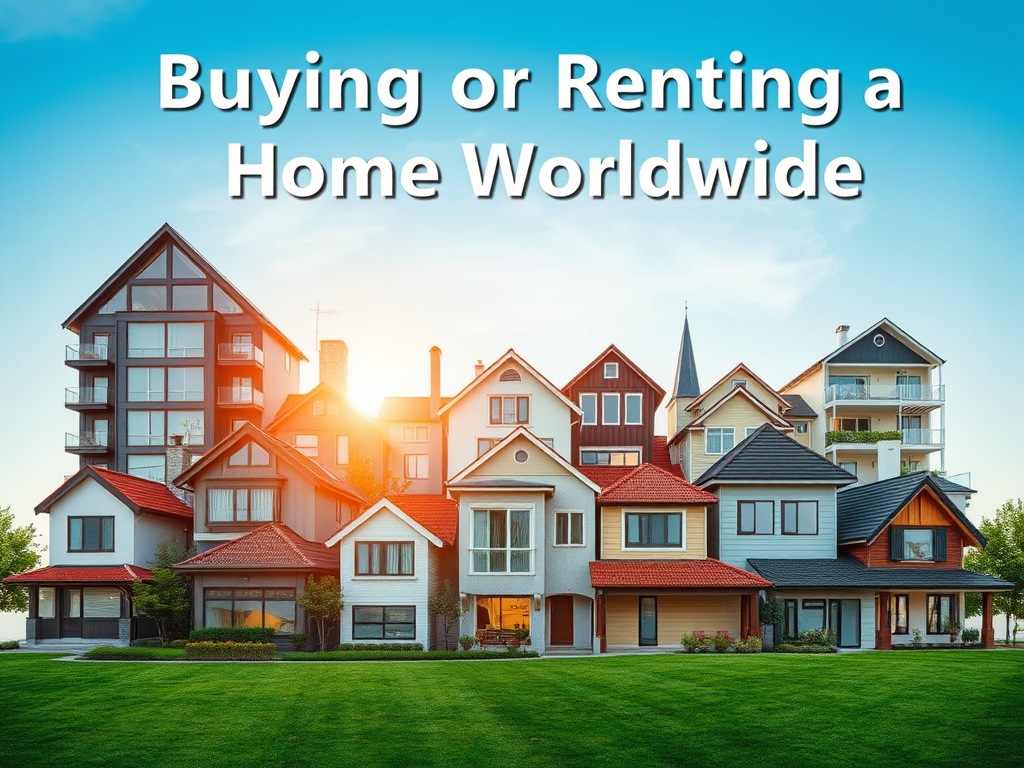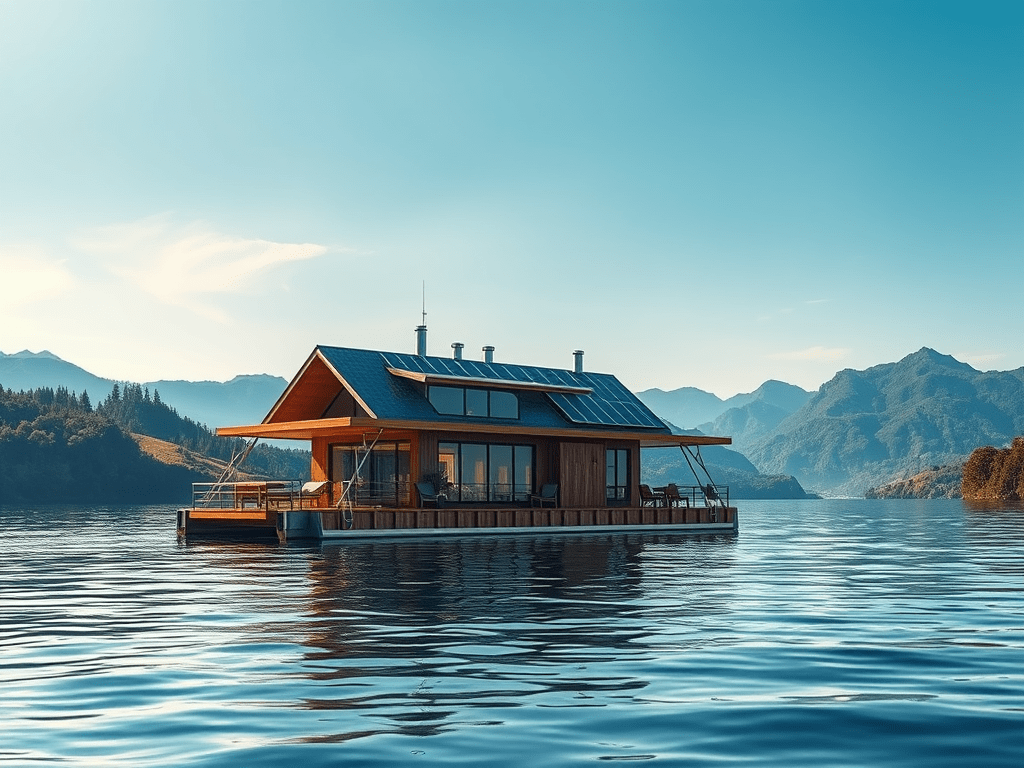
Across continents, people are redefining what “home” means. For some, it is a fixed apartment in the city or a suburban house. For others, it might be a boat on a river, a caravan on the road, or a chalet tucked into the mountains. These choices often reveal a paradox: what once symbolized necessity and survival is now equally associated with privilege and luxury. The same houseboat, mobile home, or wooden cabin that once provided affordable shelter may today be marketed as an exclusive lifestyle.
Life on the Water: Houseboats, Yachts, and Floating Villages
Europe — Berlin Canals, Paris Péniches, and Monaco Yachts
In Berlin, living on the water has become a practical alternative for those squeezed out of the rental market. A modest houseboat along a canal can cost less than half the rent of a central apartment, while offering a sense of freedom and closeness to nature. Paris presents a different picture: the péniches moored along the Seine range from simple barges converted into homes to million-euro floating residences with modern interiors. At the other end of the spectrum, in Monaco and Cannes, luxury yachts are not just leisure vessels but permanent homes for the wealthy, a lifestyle worlds apart from affordability.
Asia — From Survival to Tourism Luxury
In Asia, water-based living is both an ancient tradition and a modern reinvention.
- In Hong Kong, the floating sampan communities that once filled Aberdeen Harbour have nearly disappeared, replaced by high-priced houseboats that cost as much as apartments in Kowloon.
- In the Philippines, families in Cebu or Palawan continue to build stilt or floating homes. Many spend under US$10,000 on construction, compared with US$30,000–50,000 for a modest house on land.
- In Thailand, river-based housing is part tradition and part tourism. A floating hotel room on the Chao Phraya can cost more per night than a worker’s monthly rent in Bangkok.
- On the Mekong Delta in Vietnam, floating houses keep families near fishing grounds. For them, it is not luxury but survival — cheaper and more practical than land-based housing.
Africa — From Nile Houseboats to Stilt Villages
Africa offers a striking duality, from prestige houseboats to vulnerable stilt villages.
- In Egypt, Cairo’s Nile houseboats (ʿAwāmāt) once housed middle-class families. Today, they are prestige properties, with high rents, government regulation, and risks from seasonal flooding.
- In West Africa, fishing families in Ghana and Nigeria build stilt homes above lagoons. These are cheaper than land housing but exposed to storms and sea-level rise.
- Around Lake Victoria in Uganda and Tanzania, floating or stilt homes host fishing villages. Children often commute to school by canoe, while families face sanitation and storm-related challenges.
- In South Africa, the trend is reversed: chalet-style retreats in the Drakensberg or along the coast are marketed to the wealthy, packaging rustic simplicity as leisure luxury.
Australia — Houseboats and Outback Retreats
Australia combines river life with remote survival. Along the Murray River, families, retirees, and tourists live on houseboats ranging from simple wooden craft to modern floating villas powered by solar energy. In the outback, small cabins and shacks operate off-grid with rainwater tanks, generators, and solar panels. For some families, this is a permanent necessity; for others, these same structures are transformed into high-end eco-lodges catering to wealthy visitors seeking isolation.
South America — Stilt Villages in the Amazon Basin
In Brazil and Peru, entire communities along the Amazon live in stilt houses that rise and fall with the river’s seasonal floods. Built from local timber and palm, these homes represent a form of adaptation and survival. Yet increasingly, the same structures are promoted as “eco-experiences” for tourists, repeating the global pattern of survival rebranded as luxury.
Key Takeaways — Life on the Water
- Water living ranges from affordable survival housing in Asia, Africa, and South America to multi-million-euro luxury yachts in Europe.
- Costs vary widely: under US$10k for a stilt house in the Philippines vs. over €1m for a Paris houseboat.
- Benefits include nature, mobility, and heritage; risks include storms, flooding, sanitation, and legal insecurity.
- Governments differ: Europe often grants addresses and taxes houseboats, while many stilt villages in Africa, Asia, and South America remain “informal.”
Life on the Road: Mobile Homes, Caravans, and RVs
United States and Canada
Mobile homes are among the most widespread forms of alternative housing. A unit often costs US$70,000–120,000 compared with US$300,000 or more for a suburban house. Many retirees embrace RV culture, traversing the country without leaving home comforts behind. For low-income families, trailer parks remain one of the few affordable options, though stability can be fragile. Residents often rent the land beneath their homes, leaving entire communities vulnerable to eviction if the property is sold to developers. Insurance is available but costly, particularly in regions prone to hurricanes and tornadoes.
Europe
In the United Kingdom and Spain, caravans function both as seasonal holiday homes and permanent residences for retirees or seasonal workers. Costs are considerably lower than apartments in major cities, though year-round living often requires legal permissions. In Eastern Europe, caravans and mobile homes remain tied to both economic necessity and cultural traditions. Among Roma communities, caravans symbolize mobility and heritage, though modern housing policies sometimes challenge this lifestyle.
Australia — Caravans and the Grey Nomads
Australia has one of the world’s strongest caravan cultures. Retirees known as “grey nomads” sell their houses and travel the country in caravans or campervans, creating a mobile subculture of community and independence. Working families also rely on caravan parks near employment hubs, particularly in mining regions and along the coast. A used caravan may cost A$20,000–50,000, while new models can range from A$60,000 to A$150,000 or more. Weekly park fees (A$150–400) are often cheaper than city rents, though off-grid living requires additional investments in solar panels and water tanks.
Why People Choose the Road
The reasons are as varied as the people themselves. For some, mobile homes and caravans are the only affordable path to ownership. For others, they represent freedom and flexibility, the ability to change scenery without changing home. Trailer parks can also foster tight-knit communities, though they carry social stigma. At the top end, luxury RVs costing US$500,000 or more are fitted with satellite internet, designer kitchens, and high-end interiors — turning what was once survival into indulgence.
Key Takeaways — Life on the Road
- Mobile living can be 70% cheaper than buying a suburban house in the U.S., but insurance and land leases can undermine savings.
- In Australia, the caravan lifestyle is split between retirees seeking freedom and working families seeking affordable shelter.
- Europe uses caravans as both holiday escapes and permanent homes, with cultural ties in Eastern Europe.
- Vulnerabilities include social stigma, eviction risk when land is sold, and weather damage in storm-prone areas.
Life in Retreat: Chalets and Cabins
Retreat living shows how survival housing evolves into lifestyle.
- In Canada, lakeside chalets provide both weekend escapes and, at times, cheaper ownership than city condos.
- In Norway and Sweden, traditional hytter and stuga embody simplicity and family heritage, though wealthy buyers have transformed many into luxury properties.
- In the Alps, modest farmer’s chalets have become multi-million-euro homes, complete with spas and staff, particularly in ski resorts.
- In South Africa and Australia, chalets are frequently marketed as eco-lodges, serving high-end tourism under the guise of rustic living.
Key Takeaways — Life in Retreat
- Retreat housing shows the clearest shift from survival to luxury: shepherd huts and fishing cabins turned into million-euro chalets.
- In Canada and the Nordics, modest chalets still represent family heritage, though rising demand drives up costs.
- Eco-lodges in South Africa and Australia frame “simplicity” as an exclusive tourism experience.
- High upkeep, heating, and isolation are challenges, but these retreats remain symbols of wealth and exclusivity worldwide.
Costs at a Glance (Indicative, highly variable)
| Lifestyle / Region | Entry Cost (approx.) | Ongoing Costs | Compared to Standard Housing |
|---|---|---|---|
| U.S. Mobile Home | US$70–120k | Lot rent + insurance (US$500–1,500/mo) | ~70% cheaper than US suburban house (US$300k+) |
| Australia Caravan | A$20–50k (used) / A$60–150k+ (new) | Park site A$150–400/week; off-grid gear extra | Still lower than Sydney/Melbourne rents (A$500–700/week) |
| Philippines Floating/Stilt House | <US$10k build | Minimal (repairs, water, fishing gear) | Much cheaper than land house (US$30–50k) |
| European Houseboat (Paris/Amsterdam) | €50k–1m+ purchase | Mooring + insurance €2k–10k+/year | Can be higher than city apartments if luxury |
| Murray River Houseboat (Australia) | A$150–300k (basic) / A$400–700k+ (luxury) | Mooring + maintenance A$5k–15k/year | Similar to or above suburban house prices |
| Alpine Chalet (Switzerland/France) | €1m–10m+ | Heating + maintenance €10k–50k/year | Far more expensive than typical city apartments |
| Amazon Stilt House (Brazil/Peru) | US$5–15k build | Minimal (wood repairs, fishing income) | Cheapest option; survival-driven not luxury |
Note: Figures are indicative and vary by region, legal status, and condition. They illustrate how alternative living can be cheaper than city housing in some cases, yet vastly more expensive when rebranded as luxury.
When Survival Becomes Luxury
Everywhere, the same pattern emerges: housing once defined by survival is later rebranded as luxury. Fishermen’s boats in Asia become boutique resorts. Stilt houses in Ghana or Brazil are marketed as cultural heritage tourism. U.S. trailers inspire the “tiny home” trend. Alpine cabins become multi-million-euro chalets. Housing, in all its forms, is never just about shelter. It is about identity, culture, and often, status.
Conclusion
From Cairo’s Nile houseboats to Brazil’s Amazon stilt villages, from Australia’s caravans to Monaco’s yachts, from Lake Victoria’s fishing homes to Canada’s chalets, alternative living reveals the sharp contrasts of our time. For some, it is a necessity — cheaper, simpler, rooted in tradition. For others, it is a display of privilege, exclusivity, and wealth.
The same river, road, or mountain can host both the modest and the millionaire. And in that tension lies the real story: housing is not only about walls and roofs but about meaning, freedom, and how society draws the line between survival and luxury.
Read More from Curianic
- Buying or Renting a Home Worldwide: The Complete Guide for Locals and Foreign Buyers — Global tips on navigating property markets from finding fair rents to avoiding traps as a foreign buyer.
- Things I Stopped Buying — and Why I Don’t Envy Luxury Homes Anymore — A reflection on why less can mean more, and how letting go of luxury shapes freedom and values.
- The Real Cost of Living Abroad: Taxes, Culture, and Surprising Price Gaps Worldwide — Explore how daily costs shift across countries — and why relocation isn’t always cheaper.
- Keep Your Houseplants Alive: Best Indoor Plants for Positive Energy — Small touches at home can make a big difference — discover easy plants that lift mood and air quality.