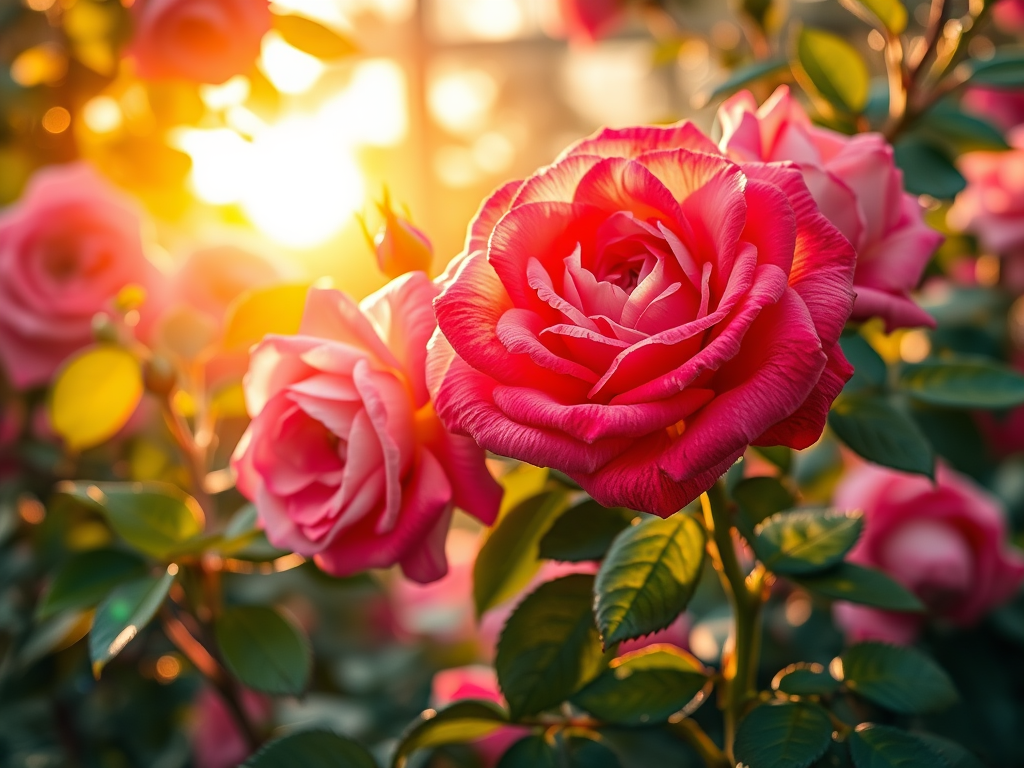
If one flower tells the story of civilization, it is the rose. For more than 4,000 years, it has been celebrated as a symbol of love, secrecy, purity, and power. Beyond beauty, it has served as medicine, perfume, and even sacred offering. From ancient palaces and temples to modern gardens and perfumeries, the rose continues to unite cultures across time and geography.
First Cultivation and Early Symbolism
Mesopotamia and Persia
The earliest records of rose cultivation trace back more than 4,000 years to Mesopotamia and Persia (modern Iran). Ancient texts and archaeological remains suggest roses were planted in palace gardens and honored as divine symbols. For the Persians, the rose became a metaphor in poetry — a flower that embodied both human love and the soul’s longing for the eternal.
From Syria, the Rose de Damas (Damask rose) would later emerge — a variety so fragrant and enduring that it gave Damascus its lasting place on the world’s rose map.
Greece and Rome
The rose spread westward into Greece and Rome, where its meanings deepened. In Greek mythology, the rose was born from the tears of Aphrodite and the blood of her beloved Adonis, tying it forever to passion and grief.
The Romans embraced the rose on a massive scale. They established vast farms around the Mediterranean, exporting roses to Gaul, Britain, and Spain. Roses adorned banquets, were woven into crowns, and even showered down as “rose rain” at imperial feasts. The phrase sub rosa — “under the rose” — signified secrecy and trust, and the practice influenced European culture for centuries.
China
In China, roses were cultivated as early as the Han Dynasty (200 BCE – 220 CE). Imperial gardens featured roses both for their beauty and medicinal qualities, while poets admired them alongside peonies and lotuses.
China’s most lasting contribution came through Rosa chinensis, which introduced the genetic trait of repeat flowering. While European roses often bloomed only once per year, Chinese varieties opened the path for modern hybrids that bloom throughout the season. When Chinese roses arrived in Europe in the 18th century via trade routes, they revolutionized breeding and reshaped the global rose family.
Symbolically, roses in China represented eternal spring, youth, and prosperity. Today, China remains one of the largest domestic producers of roses, with Yunnan province as a hub, though less dominant in exports compared to Kenya or Ecuador.
Medieval Europe
With the rise of Christianity, roses took on new layers of symbolism. White roses came to represent purity and the Virgin Mary, while red roses echoed sacrifice and martyrdom. In Catholic processions such as Corpus Christi, rose petals were scattered along streets as a sign of divine blessing.
Later, roses entered politics and heraldry. In England, they became the iconic symbols of rival houses — the red rose of Lancaster and the white rose of York — whose conflict is still remembered as the Wars of the Roses. In France, roses adorned coats of arms and royal estates, representing nobility and refinement.
Damask Roses: Fragrance and Heritage
Among all varieties, the Damask rose (Rosa × damascena), also known as the Rose de Damas, is perhaps the most legendary. Believed to have originated in Persia and Syria, it gained its name from Damascus, the city through which crusaders and traders helped spread it into Europe.
Damask roses are treasured for their fragrance, considered one of the most intense in the plant world. They bloom briefly, often only once or twice a year, but their flowering is celebrated with festivals — particularly in Bulgaria’s Valley of the Roses and Turkey’s Isparta region, which remain leading producers of rose oil today.
French Roses: The Rose of Provins
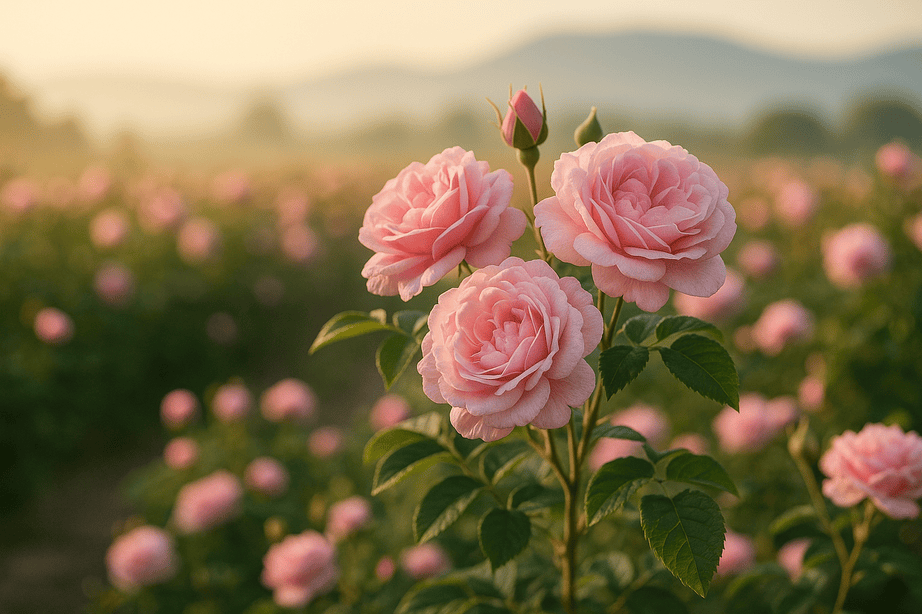
If the Damask rose defined the East, the French rose (Rosa gallica) defined Europe. Known as the Rose of Provins, it was cultivated in France as early as the 13th century, especially in the royal gardens of the Île-de-France.
The Rosa gallica officinalis became famous not just for beauty but also for utility. Its petals were dried for teas, infused into syrups, and distilled into rose water. Apothecaries prescribed it for ailments ranging from digestive troubles to melancholy. Provins itself became a center of trade, exporting rose products across Europe.
Symbolically, the French rose embodied courtly love, nobility, and refined taste. It also had a political face, appearing in heraldic designs and royal emblems. Its fragrance and resilience made it a favorite in medieval monasteries, castles, and eventually, modern gardens.
The Many Kinds of Roses
Centuries of breeding have given rise to thousands of rose varieties, each suited to different climates and cultural uses. Among the most notable:
- Hybrid Tea Roses: Iconic long-stemmed roses, bred for bouquets and ceremonies.
- Floribunda Roses: Bloom in clusters, offering vibrant displays in gardens.
- Grandiflora Roses: A fusion of hybrid teas and floribundas, balancing elegance with abundance.
- Climbing Roses: Romantic, arching varieties often trained on trellises and pergolas.
- Shrub Roses: Hardy, bush-like varieties, including English roses bred for fragrance and disease resistance.
- Miniature Roses: Compact but striking, ideal for balconies and small gardens.
- Old Garden Roses: Historic varieties predating 1867, including damasks, albas, and gallicas.
- Wild Roses (Species Roses): The five-petal ancestors of all modern hybrids, still found across Asia, Europe, and the Americas.
The Language of Colors
Each rose color carries a meaning, a silent message that has traveled through history and across cultures:
- Red: Passion, romance, eternal love
- White: Innocence, purity, remembrance
- Pink: Gratitude, admiration, tenderness (light = sweetness, dark = appreciation)
- Yellow: Joy, friendship (once jealousy in Europe)
- Orange: Energy, enthusiasm, fascination
- Lavender: Mystery, enchantment, love at first sight
- Black: Endings, rebirth, deep mystery
- Blue: The unattainable, dreams beyond reach
Literature reinforced these associations: Persian Sufi poets like Hafez and Rumi saw the rose as the soul’s longing for God, while in Shakespeare’s Romeo and Juliet, the line “a rose by any other name would smell as sweet” cemented the rose as a metaphor for love beyond labels.
Roses in Perfume
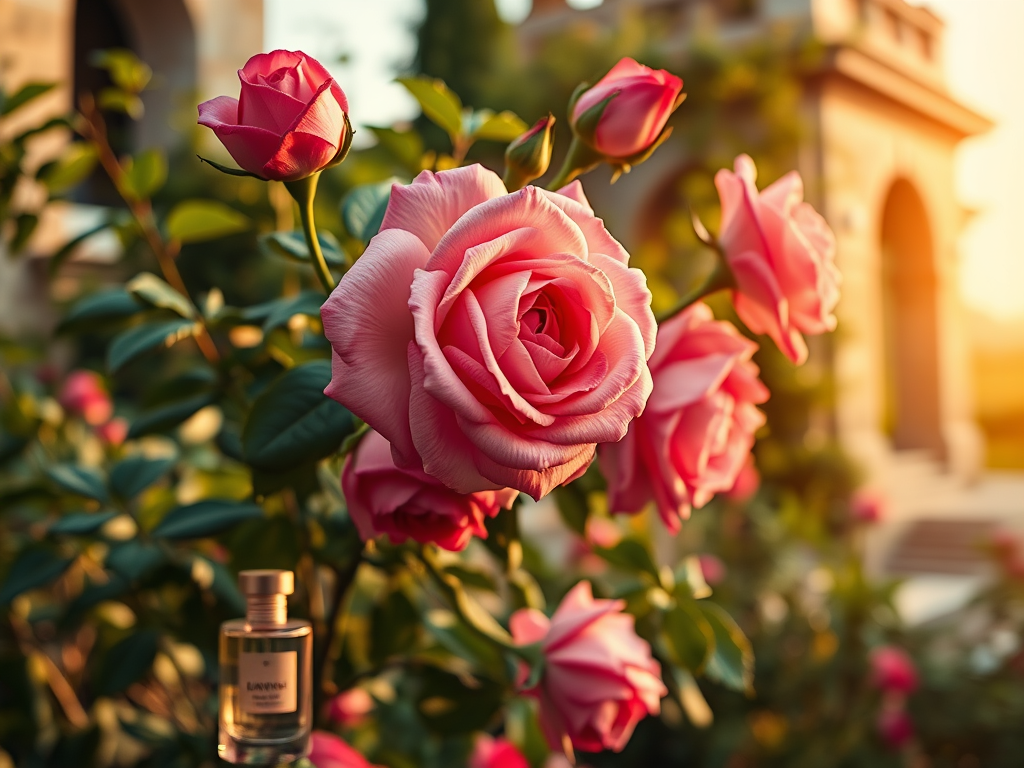
Roses remain the beating heart of perfumery. The Damask and Centifolia roses are the most sought after for their oil, forming the base of countless luxury fragrances. Among the most famous:
- Chanel No. 5 – blending May rose (Centifolia) with jasmine.
- Yves Saint Laurent Paris – a celebration of the rose in French fashion.
- Lancôme Trésor – rich with Damask rose notes.
- Serge Lutens Sa Majesté la Rose – an ode to Moroccan and Turkish roses.
- Jo Malone Red Roses – a fresh, contemporary interpretation.
Most perfumes rely on the Damask rose (Rosa × damascena) for its depth, while French perfumery often highlights the Centifolia rose (Rosa × centifolia), the delicate “May rose” of Grasse.
Extracting Rose Oil and Rose Water
Producing rose essences is labor-intensive and precise:
- Harvesting: Roses are still hand-picked at dawn, when their fragrance is strongest and volatile oils are most concentrated.
- Rose Water: Obtained through steam distillation, where petals are heated and the vapor condensed into aromatic water. Used in skincare, sweets, and rituals.
- Rose Oil (Attar of Roses): Requires 3,000–4,000 kg of petals for 1 kg of oil, making it one of the most precious essential oils in the world.
- Modern Perfume Extraction: In addition to steam distillation, perfumers also use solvent extraction to produce rose concrete and rose absolute, concentrated forms widely used in fine fragrances.
Medicinal Uses of Roses
For centuries, roses have been part of healing traditions across cultures:
- Rose Tea: Dried petals brewed as a calming tea, believed to ease digestion, reduce stress, and support sleep.
- Rose Honey: Bees feeding on rose flowers produce aromatic honey used as a tonic, while petals are also infused in honey as a remedy for sore throats and colds.
- Skincare: Rose water applied to the face to balance tone, reduce inflammation, and soothe irritation; rose oil used to soften fine lines and aid skin regeneration.
- Hair and Body: Applied to the scalp to strengthen roots, reduce dandruff, and add shine.
- Traditional Remedies: In Persia, India, and China, roses were used to lift the mood, reduce headaches, and cool fevers.
Beliefs and Rituals
Beyond medicine, roses carry deep spiritual and cultural meaning:
- Islamic Traditions: Rose oil and perfumes are used to cleanse and anoint mosques, shrines, and the Kaaba in Mecca. Roses symbolize purity and divine blessing.
- Christian Europe: Rose petals were scattered in Corpus Christi processions and used in church ceremonies to represent heavenly grace.
- Hindu Culture: Rose garlands bless bride and groom with prosperity and divine favor.
- Bridal Rituals in the Middle East & South Asia: Brides are bathed in rose water for beauty and renewal; in some traditions, brides even drink rose water, believed to perfume the body from within.
- Persian Sufi Poetry: The rose symbolizes the soul’s longing for God — an eternal metaphor of love and divine union.
Where Roses Are Grown Today
Roses are now a cornerstone of the global flower industry. While some countries focus on cut-flowers, others preserve perfume traditions or wild genetic diversity.
| Country | Specialty | Rose Parentage / Type |
|---|---|---|
| Colombia | Top exporter to North America, especially around Valentine’s Day. | Modern Hybrid Tea and Floribunda roses |
| Ecuador | High-altitude roses with large, vibrant blooms. | Modern Hybrid Tea roses |
| Kenya | Major supplier to European markets, thriving in equatorial conditions. | Modern Hybrid Tea and Floribunda |
| Ethiopia | An emerging rose producer for Europe. | Modern Hybrid Tea |
| Netherlands | Historic center of rose breeding and auctions. | Wide range, including Hybrid Tea, Miniature, and trial hybrids |
| India | Expanding rapidly with both domestic and export demand. | Hybrid Tea and Rosa centifolia (heritage) |
| Bulgaria & Turkey | Global leaders in rose oil from Damask roses. | Damask Rose (Rosa × damascena) |
| Iran | Famous for rose water (Gulab), especially in Kashan. | Damask Rose |
| Morocco | Produces Damask roses in the Dades Valley for perfume oil. | Damask Rose |
| China | Major domestic producer, origin of repeat-blooming hybrids. | Rosa chinensis (parent of modern roses) |
| Syria | Historical homeland of the Damask rose; less present in modern trade but central to rose heritage. | Rose de Damas (Rosa × damascena) |
| Central Asia (Kazakhstan, Caucasus) | Native range of wild rose species, preserving genetic diversity. | Wild Roses (Rosa spp.) |
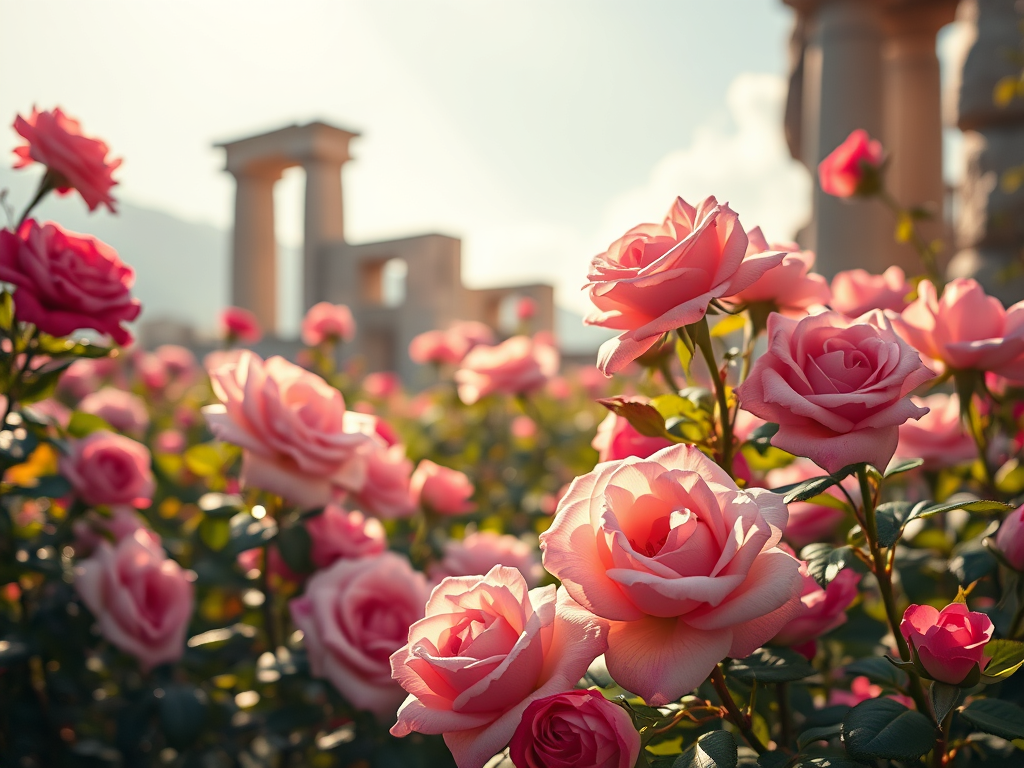
Closing Reflections
The story of the rose is a journey across civilizations — from ancient Babylon to modern Bogotá, from the dynasties of China to the perfumeries of Paris. It is a flower that embodies contradiction: fragile yet resilient, ornamental yet medicinal, spiritual yet commercial.
Whether in the form of a freshly cut bloom, the heritage of a French gallica, or the distilled oil of a Damask rose, the rose continues to symbolize humanity’s enduring fascination with beauty, love, and meaning.
A Note on Rose de Damas and Syria
As shown in the table above, the Rose de Damas (Damask rose) remains inseparable from Syria, the land that gave it its name. While today’s global rose industry is dominated by Bulgaria, Turkey, Morocco, France, China, and Latin America, Syria’s role as the birthplace of the world’s most famous rose endures. Even though conflict has reduced its presence in trade, Damascus still perfumes history — a reminder that cultural heritage can outlast hardship.
Supporting Table: Heritage & Diffusion Through History
| Era / Region | Contribution to Rose Heritage | Associated Roses / Notes |
|---|---|---|
| Mesopotamia (Babylon) | Early garden cultivation and royal symbolism | Earliest written references |
| Persia (Achaemenid–Sasanian) | Poetic and spiritual symbolism; court gardens | Cultural root of rose mysticism |
| Syria — Damascus | Origin/lending of name to Damask rose | Rosa × damascena |
| Greece | Myth of Aphrodite; classical garden culture | Symbolic foundations |
| Rome (Empire-wide) | Mass cultivation; trade across Gaul, Britain, Hispania; sub rosa secrecy | Pan-Mediterranean diffusion |
| China (Han → Qing) | Rosa chinensis brings repeat flowering; imperial gardens | Genetic parent of modern hybrids |
| Medieval Islamic World (Persia, Al-Andalus) | Paradise-garden ideal; distillation of rose water | Ritual & perfumery techniques |
| France (Provins, Medieval–Early Modern) | Rosa gallica officinalis; apothecary syrups/teas | “Rose of Provins” heritage |
| Ottoman Sphere (Anatolia, Balkans) | Craft tradition that later anchors Bulgaria/Turkey oil | Damask oil culture |
| Victorian Britain | “Language of flowers” codified in literature | Color symbolism popularized |
Editor’s Note
This feature is part of Curianic’s Heritage Series, exploring the plants, ideas, and traditions that have shaped civilizations across continents. The rose is more than a flower — it is a story of history, belief, and enduring beauty.