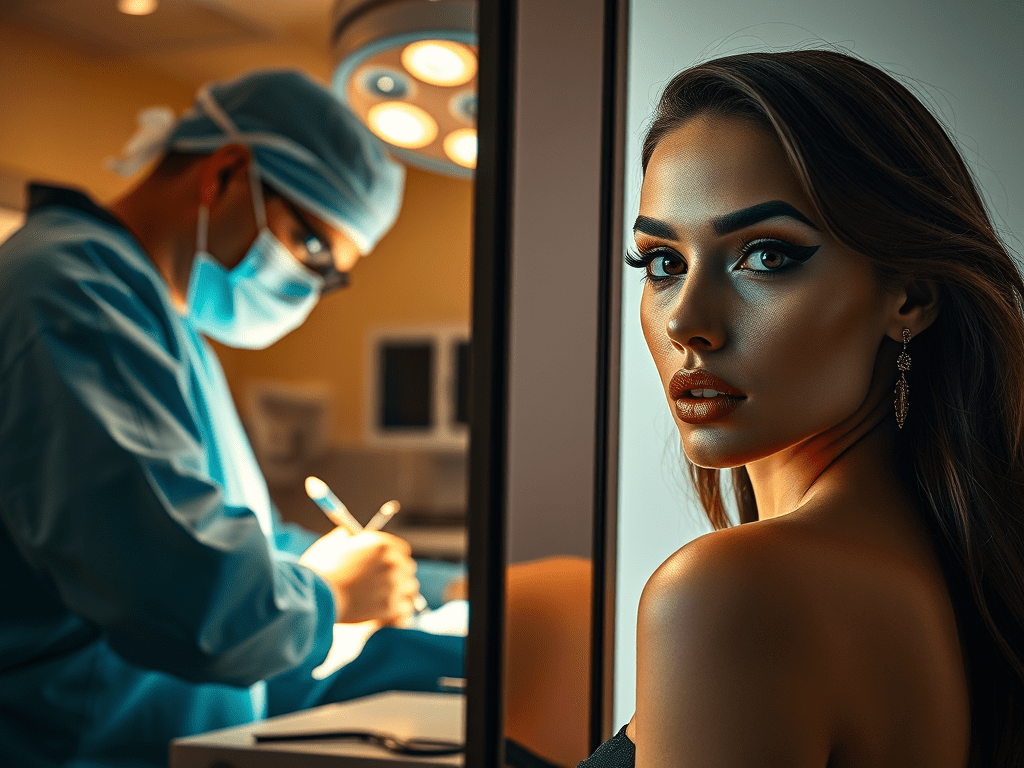
Plastic surgery began as a field of healing — a way to rebuild faces after war injuries, repair burn scars, or help women regain confidence after mastectomy. Today, it has grown into a $70+ billion global industry, fueled not by necessity but by an obsession with beauty and perfection.
Social media filters, celebrity culture, and endless marketing have transformed surgery into a lifestyle choice. For many, it’s no longer about recovery or function — it’s about chasing an image, even when there’s no medical need.
But beneath the glamour lies a darker reality: failed surgeries, uncertified clinics, scandals, social pressure, and lives ruined by unnecessary operations.
When Surgery Was Essential
Plastic surgery’s roots are in reconstruction:
- Soldiers disfigured in World War I and II needed facial reconstruction.
- Burn victims relied on skin grafts.
- Women who survived breast cancer turned to reconstructive procedures to rebuild their bodies.
These were life-saving, identity-restoring surgeries, often covered by insurance. The goal was healing, not vanity.
The Shift to Obsession
Over the last three decades, cosmetic procedures overtook reconstructive needs. Instead of survival, the focus shifted to self-image.
- Botox and fillers promise “youth in a syringe.”
- Liposuction and body contouring sell the “perfect body.”
- Rhinoplasty and eyelid surgeries became common gifts for teenagers in countries like South Korea.
But the most worrying trend is mental health dependency. Patients with body dysmorphic disorder (BDD) — who already see flaws where none exist — are undergoing dozens of surgeries. Some push so far that their appearance becomes unnatural, even monstrous.
An Industry of Exploitation
The cosmetic industry thrives on insecurity marketing:
- “Perfect yourself in three days.”
- “New you, new life.”
- “Invest in beauty, it will pay back in confidence.”
But the hidden truth is chilling:
- Unlicensed clinics perform operations in hotel rooms and apartments.
- Cheap package deals lure patients abroad with promises of luxury — but deliver unsafe conditions.
- Many clinics don’t provide aftercare, leaving patients alone if complications arise.
And the costs? Sky-high. Patients spend $20,000–$100,000+ over a lifetime on repeated operations — money that could have secured housing, education, or medical care.
Scandals prove this reality:
- Turkey medical tourism: multiple UK patients have died after botched liposuction or gastric sleeve surgeries.
- Dominican Republic: dozens of Americans hospitalized after unsafe buttock implants.
- Brazil: home of world-famous surgeons, but also the highest death rate from Brazilian Butt Lifts (BBL).
When Beauty Becomes a Monster
Plastic surgery isn’t always about fixing flaws. Increasingly, women — and men — who were already admired for their looks fall into the trap of repeated, unnecessary surgeries until their natural beauty is destroyed.
- Michael Jackson: perhaps the most famous example. Multiple nose surgeries and facial reconstructions left lasting damage to both his health and public image.
- Jocelyn Wildenstein: the New York socialite spent over $4 million on surgeries, becoming infamous as the “Catwoman.”
- Donatella Versace: excessive fillers and facelifts altered her face into an artificial, mask-like appearance.
- Hang Mioku (South Korea): after years of surgeries, she injected cooking oil into her face when doctors refused more procedures — leaving her permanently disfigured.
- Kenny Rogers (singer): admitted regret after facelifts changed his signature look, saying, “I wish I hadn’t done it.”
These cases show the darkest irony: people who were once admired for their natural appearance became living warnings about obsession. Instead of finding confidence, they ended up scarred, isolated, and in some cases mocked worldwide.
Breast Implants Scandal: When Beauty Turned Deadly
One of the most shocking cosmetic scandals was the PIP breast implant case in France.
- The company Poly Implant Prothèse (PIP) secretly used industrial-grade silicone instead of medical-grade material.
- Around 400,000 women worldwide were affected.
- Many implants ruptured, causing chronic pain, inflammation, and links to cancer — specifically a rare lymphoma (ALCL).
- Clinics kept using them because they were cheaper, despite the risks.
Later, in 2019, Allergan’s textured implants were recalled after cases of implant-related cancer spread across Europe and North America. Thousands of women have since undergone painful and costly removal surgeries, proving how even “certified” products can turn deadly when regulation fails.
Why Surgeons Sometimes Say No… and Why Others Say Yes
Not all surgeons feed the obsession. Ethical doctors sometimes refuse patients who:
- Request multiple nose jobs after already-successful surgeries.
- Seek extreme “trend procedures” that carry permanent risks.
- Show signs of body dysmorphic disorder, where no surgery will satisfy.
But here lies the vice versa:
- Many patients simply move from clinic to clinic until they find a surgeon willing to operate.
- Some surgeons, motivated by profit or fame, accept these cases despite clear risks.
- A “yes” from the wrong surgeon can permanently ruin a patient’s health and appearance.
In markets like Turkey, Brazil, and parts of Asia, it’s common for patients to chase approval until they get the surgery — even if 10 doctors already said no.
The Global Price Tag
- The cosmetic surgery industry is valued at $60–70 billion annually, projected to surpass $100 billion by 2030.
- Top spenders:
- United States: $15+ billion yearly.
- Brazil: over 1.5 million surgeries annually.
- South Korea: the highest number of surgeries per capita.
- Average costs:
- Liposuction: $4,000–$8,000.
- Breast augmentation: $6,000–$12,000.
- Rhinoplasty: $5,000–$10,000.
For many families, this equals the price of a home down payment — yet people choose beauty over financial security.
Nations With the Most Plastic Surgeries
| Rank | Country | Annual Surgeries | Special Notes |
|---|---|---|---|
| 1 | United States | ~5.4 million | Largest total volume worldwide |
| 2 | Brazil | ~3.9 million | High per capita rate, BBL hotspot |
| 3 | South Korea | ~1.2 million | Highest per capita worldwide (1 in 5 women) |
| 4 | Japan | ~1.0 million | Focus on eyelids, liposuction |
| 5 | Mexico | ~900,000 | Medical tourism hub for US patients |
| 6 | Italy | ~800,000 | Strong acceptance in women |
| 7 | Turkey | ~750,000 | Nose reshaping, hair transplants |
| 8 | Germany | ~600,000 | Heavily regulated market |
| 9 | Thailand | ~550,000 | Gender-affirming surgery hub |
| 10 | Colombia | ~500,000 | Buttock implants, liposuction |
Key Takeaway:
- US & Brazil lead in total numbers.
- South Korea leads per capita.
- Turkey, Mexico, Colombia, Thailand are rising hubs via medical tourism.
The Influence of Social Media, YouTubers, and Filters
Plastic surgery demand has skyrocketed with Instagram, TikTok, and YouTube influencers.
- Clinics sponsor influencers to vlog their surgeries, glamorizing the experience while hiding complications.
- “Before-and-after” reels encourage young audiences to think surgery is as easy as changing clothes.
- YouTubers often receive free surgeries in exchange for promotion, making procedures look trendy and risk-free.
- Beauty filters and AI-enhanced selfies have created “Snapchat Dysmorphia”, where people want surgery to look like their digital selves.
The influence is strongest among teenagers and young adults. In countries like South Korea, Brazil, and the US, it is common for parents to fund nose jobs, eyelid surgeries, or even breast implants as graduation gifts.
This raises urgent ethical questions: should minors be allowed cosmetic surgery at all?
Who Goes Under the Knife More: Men or Women?
- Women account for about 85–90% of cosmetic surgeries worldwide.
- Most common: breast augmentation, liposuction, facelifts, fillers.
- Men are a growing market (10–15%).
- Most common: hair transplants, eyelid surgery, gynecomastia reduction, jawline contouring.
- In South Korea, younger men increasingly undergo cosmetic surgery, driven by K-pop and appearance-focused culture.
The gender gap remains huge — but men are catching up as social pressure grows.
Global Plastic Surgery Statistics: Who Leads the Industry?
| Rank | Country | Annual Procedures | % Women | % Men | Most Common Surgeries |
|---|---|---|---|---|---|
| 1 | United States | ~5.4 million | 87% | 13% | Breast augmentation, liposuction, nose reshaping |
| 2 | Brazil | ~3.9 million | 88% | 12% | Brazilian Butt Lift, breast lifts, liposuction |
| 3 | South Korea | ~1.2 million | 76% | 24% | Eyelid surgery, jawline, nose reshaping |
| 4 | Japan | ~1.0 million | 81% | 19% | Eyelid surgery, liposuction |
| 5 | Mexico | ~900,000 | 85% | 15% | Liposuction, tummy tucks, breast surgeries |
| 6 | Italy | ~800,000 | 86% | 14% | Breast augmentation, facelifts |
| 7 | Turkey | ~750,000 | 84% | 16% | Nose reshaping, liposuction, hair transplants (men) |
| 8 | Germany | ~600,000 | 83% | 17% | Breast surgeries, liposuction |
| 9 | Thailand | ~550,000 | 82% | 18% | Gender-affirming surgeries, breast augmentation |
| 10 | Colombia | ~500,000 | 85% | 15% | Buttock implants, liposuction |
Insights:
- US + Brazil = nearly 40% of all surgeries worldwide.
- South Korea = most surgeries per capita.
- Men’s share is rising fastest in South Korea and Turkey.
- BBL remains the riskiest yet most desired in Brazil and Colombia.
The Psychological Fallout
The hidden cost of cosmetic obsession is mental health decline.
- Studies show women with breast implants have a higher risk of depression and suicide than the general population.
- Repeated surgeries often deepen dissatisfaction, leading to addiction-like behavior.
- Failed procedures create lasting trauma, leaving patients socially isolated and financially ruined.
Instead of finding confidence, many patients end up emotionally broken, caught in a cycle where no surgery feels enough.
Certified vs. Uncontrolled Clinics
There are centers of excellence, with strict rules and global reputation:
- South Korea: the world’s cosmetic capital, with advanced technology and skilled surgeons.
- Germany, US, UK: highly regulated and certified, but extremely expensive.
- Brazil: artistic surgeons with international fame, though risks remain with unregulated practices.
But alongside the best are danger zones:
- Turkey, Mexico, Dominican Republic, Thailand: many good clinics exist, but also a flood of uncertified centers targeting desperate patients.
- Underground operations in parts of Europe and the Middle East: unlicensed practitioners inject fillers and implants with no medical oversight.
Example: In 2018, British mother Leah Cambridge died in Turkey during a cut-price BBL — a tragedy that exposed the dark side of medical tourism.
The Human Cost of Failed Surgeries
Failed surgeries don’t just scar the body — they scar the mind.
- Priscilla Caputo (Canada): disfigured after filler injections at an unlicensed salon.
- Linda Perez (Florida): slipped into a coma after breast augmentation at a low-cost Miami clinic.
- Thousands of unnamed victims: burdened by debt, trauma, and a body they no longer recognize.
On social media, hashtags like #BotchedSurgery reveal countless faces and bodies altered beyond repair.
Why No One Controls It
- Legal loopholes: cosmetic surgery is often considered “lifestyle,” not medicine.
- Global disparity: Germany requires multiple certifications, while Turkey allows flashy ads with minimal checks.
- Profit margins: a single surgery can yield $10,000+, creating little incentive for stricter control.
- Social media pressure: Instagram and TikTok glamorize transformations while hiding the failures.
The result is an uncontrolled industry where patients are often left unprotected.
Plastic Surgery Fast Facts
| Fact | Key Insight |
|---|---|
| Global Market Size | $60–70 billion annually (expected to exceed $100B by 2030) |
| Women vs. Men | ~85–90% women, ~10–15% men (men’s share growing in South Korea & Turkey) |
| Top Countries (Total Surgeries) | United States (5.4M), Brazil (3.9M), South Korea (1.2M), Japan (1M), Mexico (0.9M) |
| Highest Per Capita | South Korea – 1 in 5 women has had surgery |
| Most Popular Surgeries (Women) | Breast augmentation, liposuction, eyelid surgery |
| Most Popular Surgeries (Men) | Hair transplants, eyelid surgery, jawline contouring |
| Deadliest Procedure | Brazilian Butt Lift (BBL) – highest global mortality rate |
| Major Scandals | PIP breast implant scandal (400,000 women affected); Allergan implant recall (linked to lymphoma) |
| Psychological Fallout | Higher rates of depression and suicide in women with implants; many fall into surgery addiction |
| Social Media Effect | YouTubers & influencers sponsored by clinics glamorize surgery; filters fuel “Snapchat Dysmorphia” |
Conclusion
Plastic surgery is still miraculous when used to heal. But scandals, failed operations, and stories of women destroyed by obsession prove the industry has crossed a dangerous line.
Until governments enforce stricter regulation, clinics adopt mental health screening, and surgeons put ethics above money, the cycle of obsession, exploitation, and tragedy will continue.
Read More from Curianic
- How Work and Lifestyle Pressure Trigger Different Types of Depression
→ Relates to mental health and lifestyle pressures behind cosmetic choices. - Headaches and Migraines: The Full List of Triggers You Shouldn’t Ignore
→ Pairs with body awareness and physical–psychological connection. - Red Light Therapy for Nerve Pain: Evidence, Stress Relief, and Recovery Results
→ Bridges health trends and scientific claims — same investigative tone. - Scrolled Out: How Social Media Is Rewiring Our Brains
→ Excellent fit to emphasize the social media pressure angle already in your surgery article. - When Everything Feels Cloudy: Brain Fog, Vision Haze, and the Echoes We Rarely Talk About
→ Keeps the mood reflective and fits Curianic’s signature “mental clarity” thread.