Born beneath warm skies and scented breezes, the jasmine plant carries a legacy that transcends borders and centuries.
It is a flower that blooms when the world grows quiet — releasing its fragrance at dusk, as though meant for hearts that listen in silence.
From the gardens of ancient Persia to the courtyards of Damascus and the palaces of India, jasmine’s story is one of poetry, ritual, and survival — a story written in scent and legend.
The Origin — From Persia to the World
The name “jasmine” comes from the Persian yasmin, meaning gift from God.
Few flowers have traveled so far or carried so much meaning. Its earliest roots reach back thousands of years to Persia, northern India, and the Himalayas, where wild species grew among olive trees and stone terraces.
Arab traders carried it westward across the desert routes to the Mediterranean, where its perfume became a prized treasure.
Through conquest and trade, jasmine entered Egyptian perfumery, Chinese gardens, and the Mughal courts of India, eventually crossing into Europe with the Moors who brought it to Spain.
By the 16th century, jasmine had found a new home in the perfumed valleys of Grasse, France, where it became the invisible signature of luxury fragrances — a symbol of elegance rooted in Eastern soil.
The Fragrant Species — Voices of the Night
There are more than 200 species of jasmine, yet only a few possess the scent that made it immortal.
Arabian Jasmine (Jasminum sambac)
Known as Sambac, Motia, or Mogra, this variety blooms at night and fades by morning.
Native to South and Southeast Asia, its fragrance is intense, sweet, and hypnotic.
It is the national flower of the Philippines and Indonesia, woven into garlands for weddings, prayers, and celebrations.
Its oil — known as sambac absolute — is one of the world’s most expensive perfume ingredients, used in iconic fragrances such as Chanel No. 5, Dior J’adore, and Joy by Jean Patou.
Royal Jasmine (Jasminum grandiflorum)
Also called Spanish or French jasmine, this species was first cultivated in northern India and Iran, and later in the Mediterranean.
Its scent is softer and creamier than sambac, like velvet on the air.
It became the beating heart of French perfumery, harvested at dawn in the hills of Grasse.
Even today, it remains the quiet soul of perfumes by Guerlain, Yves Saint Laurent, and Dior.
Poet’s Jasmine (Jasminum officinale)
The original wild jasmine of Persia, Syria, and the Himalayas, officinale is called Yasmin Dimashqi — the Damascus Jasmine.
Its star-shaped white blossoms perfume the narrow lanes of Old Damascus, where it is a national emblem and a symbol of home.
Soft yet unforgettable, its fragrance represents memory itself — the scent of departure and return.
Many garden varieties, such as the star jasmine often seen on terraces and courtyards, share the scent of true jasmines though they belong to a different botanical family.
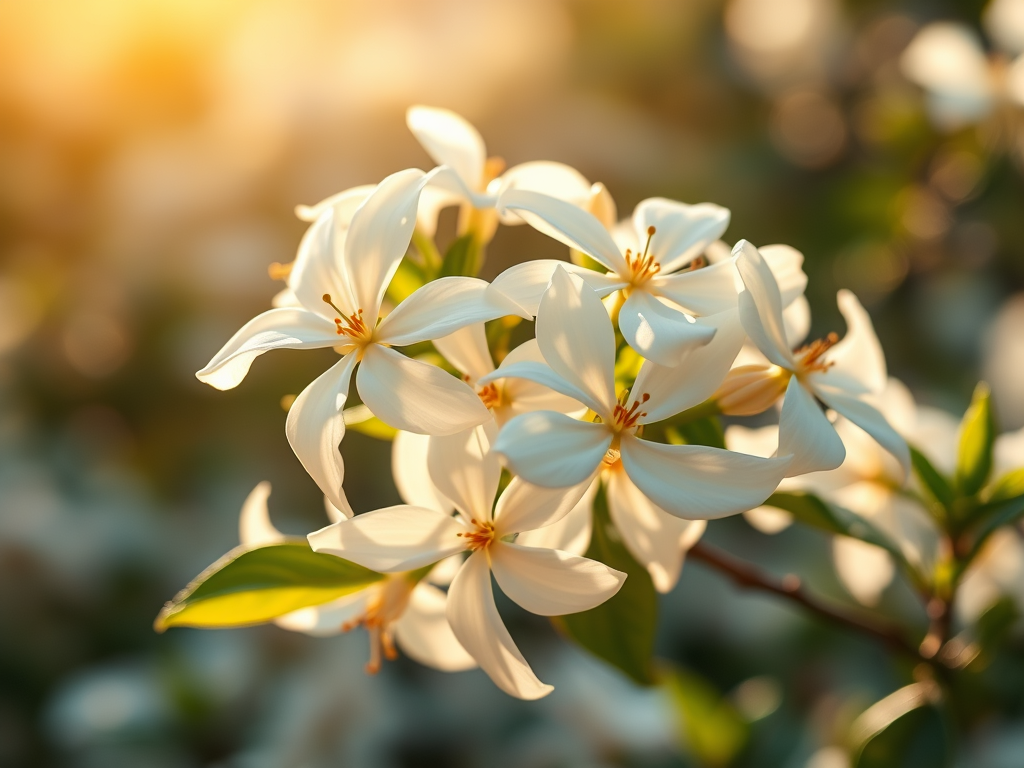
The Colors of Jasmine
Though jasmine is best known for its pure white blossoms, symbolizing purity, love, and spiritual grace, the plant exists in more than two hundred species — each with subtle differences in shade, shape, and emotional resonance.
White Jasmine
The most iconic and widely cultivated color.
White jasmine, from Jasminum officinale to Jasminum sambac, represents innocence, devotion, and eternal love.
In many cultures, its whiteness mirrors moonlight — the reason it’s called the flower of the night.
Yellow Jasmine
Found mainly in Jasminum humile and Jasminum mesnyi, yellow jasmine carries a warmer, golden hue.
It symbolizes energy, friendship, optimism, and renewal.
In Chinese symbolism, it’s linked to prosperity and happiness, often blooming at the edge of spring.
Pink and Rare Varieties
Some rare species, like Jasminum beesianum, produce soft pink or reddish-pink blossoms.
These are less fragrant but highly ornamental — representing affection, charm, and creativity.
Gardeners in temperate regions prize them for their visual delicacy rather than scent.
Symbolic Meaning of Color
Across traditions, white jasmine speaks to the soul, yellow to the heart, and pink to the senses.
Together, they echo life’s full spectrum — purity, warmth, and tenderness — all bound by the same timeless fragrance.
Jasmine in Civilization and Myth
Few flowers have inspired as many civilizations as jasmine.
In each culture it took on new meanings — always tied to emotion, devotion, and renewal.
In the Arab World
Damascus is known as Madinat al-Yasmin — the City of Jasmine.
For centuries, families planted vines of Yasmin Dimashqi on balconies, letting the blossoms spill over ancient stone walls.
In poetry and song, jasmine became a metaphor for love that endures beyond pain — a white flame against hardship, a breath of beauty against time.
In India and Southeast Asia
Jasmine holds divine and romantic power.
In Hindu mythology, it is sacred to Kama, the god of love, whose arrows are tipped with jasmine flowers.
It also adorns the goddess Lakshmi, symbolizing wealth and purity.
Every morning across India, women braid jasmine strands into their hair; at weddings, garlands of Malligai or Mogra unite bride and groom in fragrant blessing.
In Indonesia and the Philippines, white jasmine is the national flower, representing purity, devotion, and sincerity. It is used in both celebration and mourning — a bridge between joy and remembrance.
In China
Introduced along the Silk Road, jasmine took on the meaning of grace and modesty.
Its delicate form inspired the famous folk song “Mo Li Hua” (The Jasmine Flower) — a melody of elegance and purity that has echoed through centuries, performed even during the Beijing Olympics as a symbol of cultural pride.
In Europe
When jasmine arrived in Andalusia with the Moors, it transformed the night gardens of Spain.
By the Victorian era, it was the flower of sweet love and amiability, often exchanged in secret between lovers.
In France, it became the cornerstone of perfumery — a reminder that the most powerful art is invisible, carried only by air.
The Science of the Scent
Jasmine’s perfume is more than beauty — it’s chemistry and mystery intertwined.
Its fragrance arises from a symphony of over one hundred natural compounds, including benzyl acetate, linalool, and indole — the last giving jasmine its faintly animalic depth.
This trace of indole, found also in the human body, is what gives jasmine its living warmth — an aroma both floral and human, clean yet haunting.
Perfumers call it the scent of life itself — one that evokes memory, intimacy, and emotion long after the flower fades.
Jasmine in Art and Symbolism
Throughout history, jasmine has appeared not only in gardens and rituals but in the very fabric of human creativity — as a motif in painting, poetry, architecture, and song. Its delicate form and fragrance have stirred artists for centuries, representing purity, longing, and divine connection.
In Islamic and Persian Art
Jasmine flourished in the imagination of Persian miniaturists and Islamic architects, where natural motifs carried spiritual meaning.
Its five-pointed star-shaped flowers were often used in geometric tilework, symbolizing perfection, balance, and paradise.
In Persian manuscripts, poets wrote verses of love and divine union surrounded by illustrated jasmine vines, merging text and nature into a single harmony.
In Damascus, Moorish Spain, and Mughal India, the stylized jasmine motif became a favorite in carvings, mosaics, and textiles — a quiet symbol of eternal life and purity of the soul.
In Indian Art and Sculpture
In Indian temple carvings, jasmine garlands appear around deities and dancers, representing devotion and sensual beauty.
Painters of the Rajasthani and Mughal courts often included jasmine strands in the hair or hands of royal women, evoking intimacy and grace.
Even today, in classical Indian dance and film, jasmine remains a visual symbol of feminine charm — an ornament of the spirit as much as the body.
In Western Painting and Decorative Arts
When jasmine arrived in Europe, it became a beloved subject of botanical illustration and still-life painting.
Artists of the Renaissance and Baroque eras painted jasmine alongside roses and lilies to express the transience of beauty — the idea that scent fades, but art endures.
In the Victorian period, jasmine appeared on porcelain, embroidery, and wallpaper as an emblem of purity, gentleness, and faithful affection.
Its motif spread across the arts as a bridge between the exotic East and the romantic West.
In Music and Literature
The famous Chinese folk song “Mo Li Hua” (Jasmine Flower) is perhaps the best-known musical tribute to the plant — a melody of grace and nostalgia sung for over 300 years.
In Arabic poetry, jasmine often represents a lost homeland or beloved, especially in Syrian verse:
“Damascus — the jasmine of my heart.”
Writers from Gibran to Tagore and Mahmoud Darwish have all evoked jasmine as a symbol of emotion that survives distance — love, exile, and remembrance woven into one scent.
The Flower That Became a Symbol
Across languages and faiths, jasmine carries a shared vocabulary of meaning:
- Purity and Spirituality — White petals representing divine beauty.
- Love and Desire — Its nocturnal fragrance awakens passion without words.
- Memory and Homeland — The scent that returns in dreams and letters.
- Femininity and Renewal — Gentle yet persistent, always blooming again.
In modern times, jasmine has also become a symbol of peace and resilience — as in the “Jasmine Revolution” that began in Tunisia in 2010, where the flower came to represent hope and new beginnings.
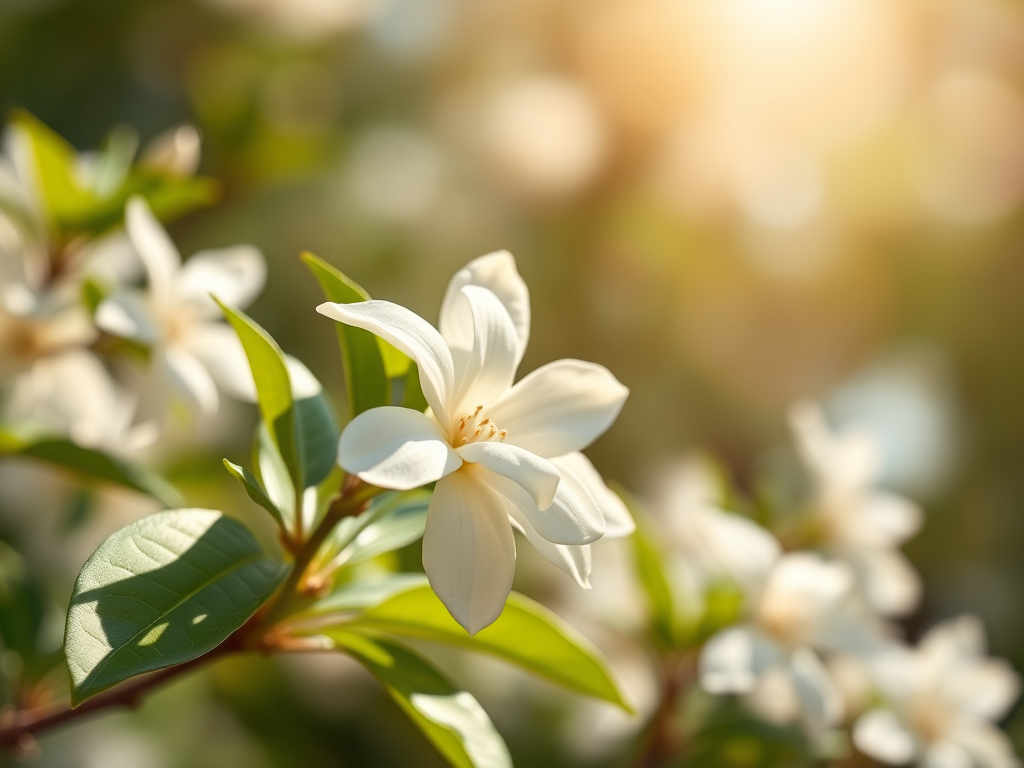
Jasmine in Cosmetics and Tea
Jasmine’s magic extends far beyond its gardens. Its essence continues to shape beauty rituals, wellness traditions, and sensory culture across the world.
In Cosmetics and Perfumery
From ancient Persia to modern Paris, jasmine has been a symbol of refinement and sensuality.
In early civilizations, women used jasmine oil to perfume their hair and skin, believing it softened the complexion and calmed the spirit.
Cleopatra was said to have sailed toward Antony on boats scented with jasmine, while Mughal queens anointed themselves with mogra oil before nightfall.
Today, jasmine remains one of the most prized ingredients in the fragrance industry.
Its extract, jasmine absolute, gives perfumes a deep, luxurious warmth and emotional balance.
It also appears in skincare and haircare products, known for its:
- Soothing and anti-inflammatory properties
- Antioxidants that help protect against pollution and aging
- Moisturizing and balancing qualities for dry or sensitive skin
In aromatherapy, jasmine oil is used to relieve stress, fatigue, and sleeplessness — symbolizing serenity through scent.
In Tea and Daily Rituals
The tradition of jasmine tea began in China during the Song dynasty, when tea leaves were layered with fresh jasmine blossoms overnight so their fragrance would be absorbed.
The result was a drink that was floral, calming, and slightly sweet — believed to soothe emotions and sharpen clarity.
Jasmine tea became a symbol of hospitality and mindfulness across Asia.
It is served to guests in China, Japan, and Vietnam, offered at weddings in the Philippines, and even used in Middle Eastern sherbets and syrups.
Its gentle caffeine content, combined with antioxidants, makes it a beloved daily ritual for both energy and peace.
Whether in perfume bottles or porcelain cups, jasmine continues to blur the line between luxury and simplicity, intimacy and ceremony.
It is a flower that lives both on the skin and on the tongue — a fragrance to wear, and a fragrance to taste.
A Flower of Night and Legend
If the rose is the flower of daylight passion, jasmine is the flower of nocturnal love — unseen yet unforgettable.
It asks for no attention, only quiet — and gives in return a fragrance that lingers on skin and in memory.
Born in the East, carried by empires, and reborn each night, jasmine remains the flower of the soul — where scent becomes memory, and memory becomes legend.