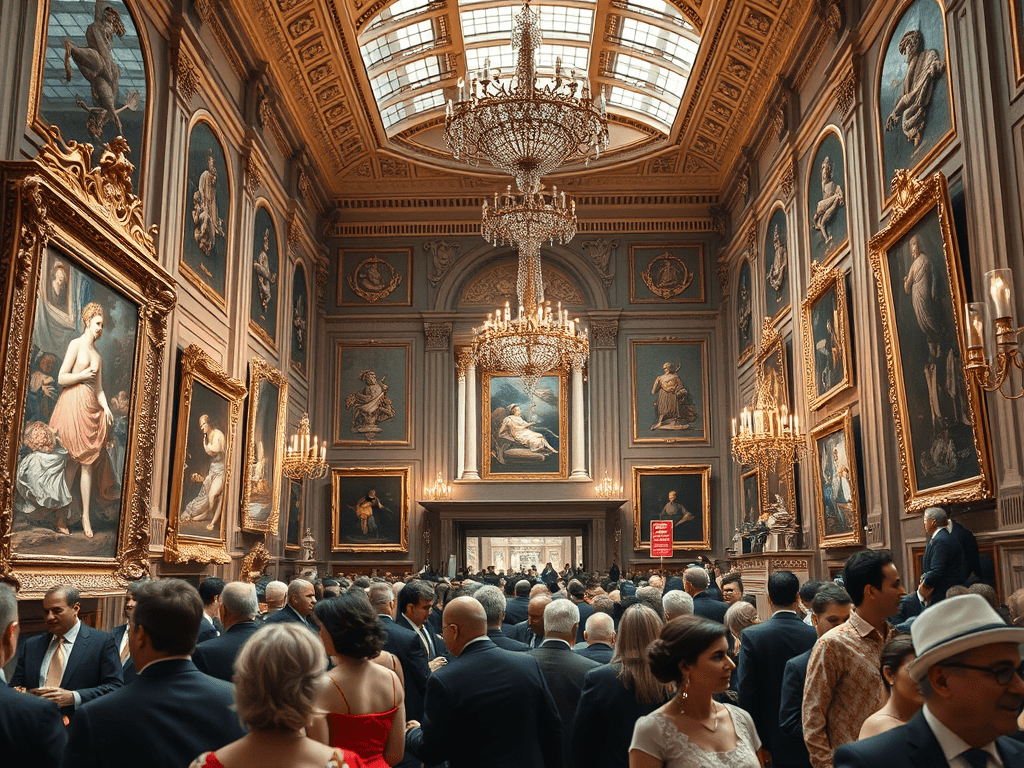
Where Value Meets Story
Behind every million-dollar bid lies more than money — it’s history, culture, and desire converging in one moment.
Auction houses are not just marketplaces; they are theatrical arenas where human taste, ambition, and art intersect. From paintings and jewelry to cars and rare manuscripts, these institutions have shaped how the world defines value.
Today, the global auction industry connects London, New York, Paris, Hong Kong, Dubai, and Riyadh — proving that art and heritage have no borders.
1. Christie’s — The Legacy of James Christie
Founded: 1766, London
Founder: James Christie
Christie’s began during the Enlightenment, when Europe’s elite were collecting art and antiquities. James Christie recognized the need for a trusted marketplace that could combine integrity with spectacle.
In 1766, he opened the first official Christie’s sale room in Pall Mall, London. The auctions quickly became social events — attended by aristocrats, scholars, and collectors.
Milestone sale: In 2017, Christie’s sold Leonardo da Vinci’s “Salvator Mundi” for $450.3 million, setting the record for the most expensive painting ever sold at auction.
Today, Christie’s operates in over 40 countries, including Dubai and Hong Kong, and is recognized as the gold standard of global art sales.
Keywords: famous auction houses, Christie’s London, Christie’s Dubai, record art sales
2. Sotheby’s — From Rare Books to Global Art Power
Founded: 1744, London
Founder: Samuel Baker
Sotheby’s started modestly — as a firm specializing in rare books and private libraries. Within decades, it grew into one of the world’s dominant auction houses, handling fine art, jewelry, and luxury property.
Historic evolution: After opening in New York in 1955, Sotheby’s became the first international auction house. It now operates galleries in major cities including Paris, Geneva, and Dubai.
Iconic sale: The Macklowe Collection (2022), valued over $922 million, remains the most expensive private art collection ever sold.
Today, Sotheby’s continues to expand into luxury fashion, NFTs, watches, and wine, blending heritage with innovation.
Keywords: Sotheby’s history, Sotheby’s New York, luxury auctions
3. Phillips — The Contemporary Challenger
Founded: 1796, London
Founder: Harry Phillips, a former associate of James Christie
Phillips carved its niche as a modern and design-focused house. It’s now known for its bold approach to contemporary art, photography, and collectible watches — appealing to a younger, global clientele.
Notable sales: Jean-Michel Basquiat, Banksy, and avant-garde design icons.
Phillips represents how the auction world adapts to modern taste — mixing art, design, and digital culture.
Keywords: Phillips auction, contemporary art market, Basquiat auction
4. Heritage Auctions — Collecting Modern History
Founded: 1976, Dallas, USA
Founders: Steve Ivy and Jim Halperin
While most auction houses were focused on fine art, Heritage built an empire around popular culture. Its sales include comics, sports memorabilia, movie props, and historical documents.
Famous sale: Babe Ruth’s “Called Shot” jersey — sold for $24 million in 2024, setting a sports memorabilia record.
Heritage Auctions pioneered digital bidding platforms, making expert-verified auctions accessible to collectors worldwide.
Keywords: Heritage Auctions Dallas, sports memorabilia auction, digital art sales
5. Dorotheum — Vienna’s Imperial Auction House
Founded: 1707, Vienna
Founded by: Emperor Joseph I
Dorotheum began as a pawn and sale office for citizens of the Austrian Empire. Over three centuries, it transformed into a hub for European art and antiques, known for its majestic neoclassical building in Vienna.
It remains one of the oldest continuously operating auction houses in the world.
Specialties: Old Masters, classical art, jewelry, and furniture.
Keywords: Dorotheum Vienna, European art auctions, imperial heritage
6. Bonhams — The Bridge Between Tradition and Modernity
Founded: 1793, London**
Focus: Fine art, antiques, jewelry, and Middle Eastern contemporary art
Bonhams is distinguished by its diverse catalog and global expansion. Its Middle East department, established in London and Dubai, plays a central role in promoting modern Arab and Iranian artists internationally.
Keywords: Bonhams Middle East, Arab contemporary art, Bonhams Dubai
7. Barrett-Jackson — Where Cars Become Collectibles
Founded: 1971, Arizona
Focus: Classic and luxury automobiles
Barrett-Jackson turned car auctions into public entertainment, combining culture, design, and nostalgia. Its televised events attract millions of viewers and collectors every year.
Record sale: A 1967 Shelby Cobra sold for nearly $6 million.
Keywords: Barrett-Jackson car auction, collectible cars, luxury vehicles
8. China Guardian & Poly Auctions — The Asian Titans
Founded: 1993 (China Guardian) / 2005 (Poly Auctions)
Focus: Chinese fine art, calligraphy, ceramics, and contemporary Asian art
These two institutions dominate the Asian art market, often competing with Western auction giants.
They’ve redefined how Chinese collectors reclaim cultural heritage once sold abroad.
Keywords: Chinese art auction, Poly Auctions Beijing, Asia art market
9. The Middle East: A Rising Auction Frontier
Over the past two decades, Dubai, Abu Dhabi, Doha, and Riyadh have become active centers in the global auction network.
Key regional players:
- Christie’s Dubai (est. 2005) — first major international house in the region
- Sotheby’s Dubai — holds exhibitions, valuations, and Islamic art events
- Bonhams Middle East — focuses on modern Arab and Iranian art
- Estuary Auctions (Abu Dhabi) — regional fine art and estate auctions
- Middle East Auction Company (Saudi Arabia) — active in real estate and high-value goods
The Gulf’s growing art scene reflects a wider regional ambition: to position the Middle East as a global cultural hub connecting East and West.
Keywords: Dubai auction market, Middle East art auctions, Sotheby’s Riyadh
10. Why Auction Houses Still Matter
Beyond glamour, these institutions preserve humanity’s collective memory.
They authenticate, document, and circulate objects that tell stories — from royal portraits to cinematic memorabilia.
Each sale is a reflection of what societies value most at that moment in time — whether it’s a Renaissance masterpiece or a digital collectible.
The World’s Auction Houses as Mirrors of Civilization
From the imperial halls of Vienna to the skyscrapers of Dubai, auction houses continue to evolve — not just as trading floors, but as cultural historians.
They remind us that what we buy, preserve, and admire today becomes tomorrow’s record of who we were.
Read More from Curianic
- Why the Wealthy Spend Millions on Paintings, Portraits, Antiques, Jewels and More
- Luxury or Burden? The True Cost of Pools, Terraces, Fireplaces, and Saunas in Modern Homes
- Passports of Privilege: How the Wealthy Use Stepping-Stone Countries to Access the West
- Private Jet Economy: Who Controls the Skies, and Who Really Profits?