When Machines Learn to Imagine
Once, creativity was the last frontier of the human spirit — a sacred spark untouched by logic or calculation. Today, that spark faces a mirror made of code. Artificial intelligence paints portraits, writes poetry, and composes symphonies. The digital world is not only automating work; it is starting to imitate wonder itself.
Yet behind every algorithm lies a question that cuts deeper than technology:
If machines can create, what becomes of human creativity?
The New Canvas: Technology as a Creative Partner
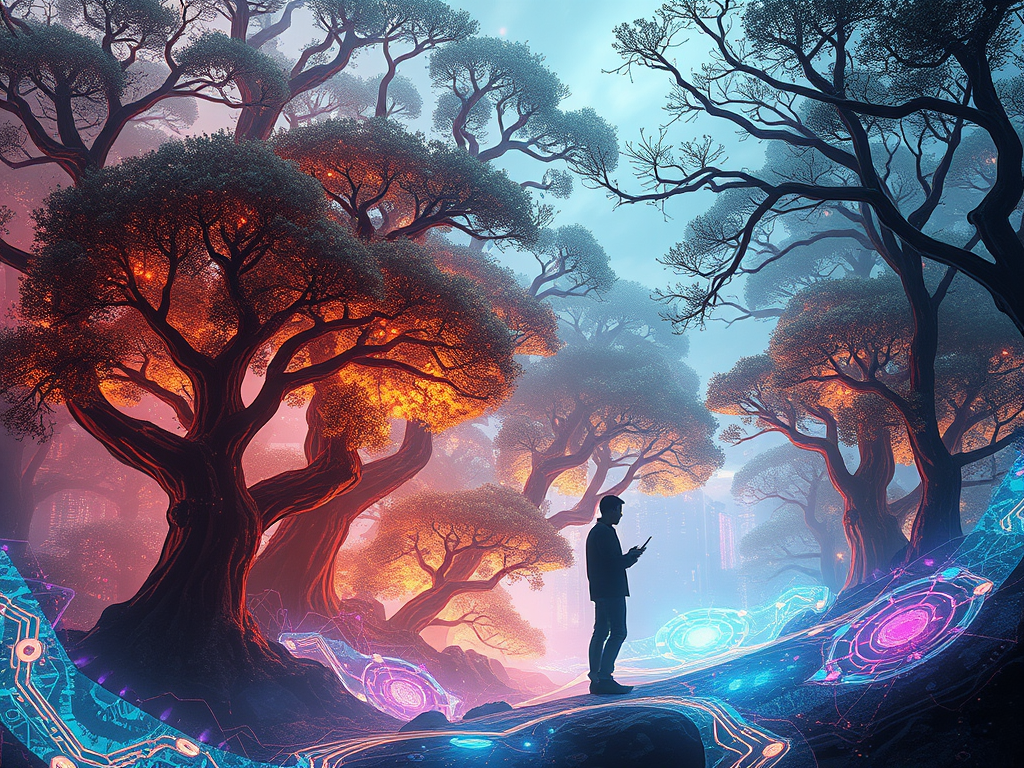
The digital revolution has transformed tools into collaborators. Artists no longer merely use technology; they converse with it.
Generative AI models such as DALL·E, Midjourney, and ChatGPT don’t replace imagination — they expand it, offering infinite starting points for the human mind to refine, interpret, and re-humanize.
In this sense, the role of the creator is shifting from maker to curator, from the hand that shapes to the mind that chooses. The brush is now digital, but the intention remains profoundly human.
Creativity has become less about invention from nothing, and more about shaping meaning from abundance.
The Crisis of Originality
But with abundance comes a quiet crisis.
When billions of images and words are generated daily, what does original even mean?
AI models are trained on collective human expression — every photograph, melody, and phrase that ever reached the public web.
Their “creativity” is a mirror of ours, recombined at unimaginable speed.
This raises ethical and philosophical dilemmas:
- Can something trained on human art be truly independent?
- Who owns the final result — the programmer, the artist, or the collective past of the Internet?
- And most of all: when everything can be created instantly, will the value of creation itself diminish?
Human Creativity: Beyond Production
To answer, we must redefine creativity itself.
Human creativity is not about speed, volume, or precision — it’s about intention, emotion, and consciousness.
A poem written by a machine can mimic beauty, but it cannot feel the heartbreak that shaped it.
An AI-generated symphony can follow structure, but not the silent tension between a composer’s doubt and hope.
The future of creativity, therefore, will not belong to those who produce the most, but to those who infuse technology with meaning — to those who make the machine’s work resonate with human truth.
The Ethical Horizon: Ownership and Authorship
As AI-generated art fills galleries and digital platforms, questions of ownership grow louder. Should creators disclose AI assistance? Should AI be credited as co-author?
Legal systems are still unprepared, but cultural responsibility begins long before regulation.
Transparency and integrity will shape trust. The creative world must draw new lines — not between human and machine, but between authentic expression and automated replication.
The Future: From Imitation to Co-Creation
The path ahead is neither dystopian nor utopian — it is hybrid.
Technology will continue to expand what imagination can do. Artists, scientists, and storytellers will use algorithms as companions, not competitors.
In this world, the most valuable creativity will come from those who master both languages: the emotional language of humanity and the analytical language of machines.
The challenge is no longer whether AI can create — but whether we can stay curious, ethical, and imaginative enough to guide it.
The Human Spark
As the digital world grows louder, the quiet power of the human mind becomes even more precious.
We invent not just to automate, but to understand ourselves.
The future of creativity will not erase humanity — it will depend on it.