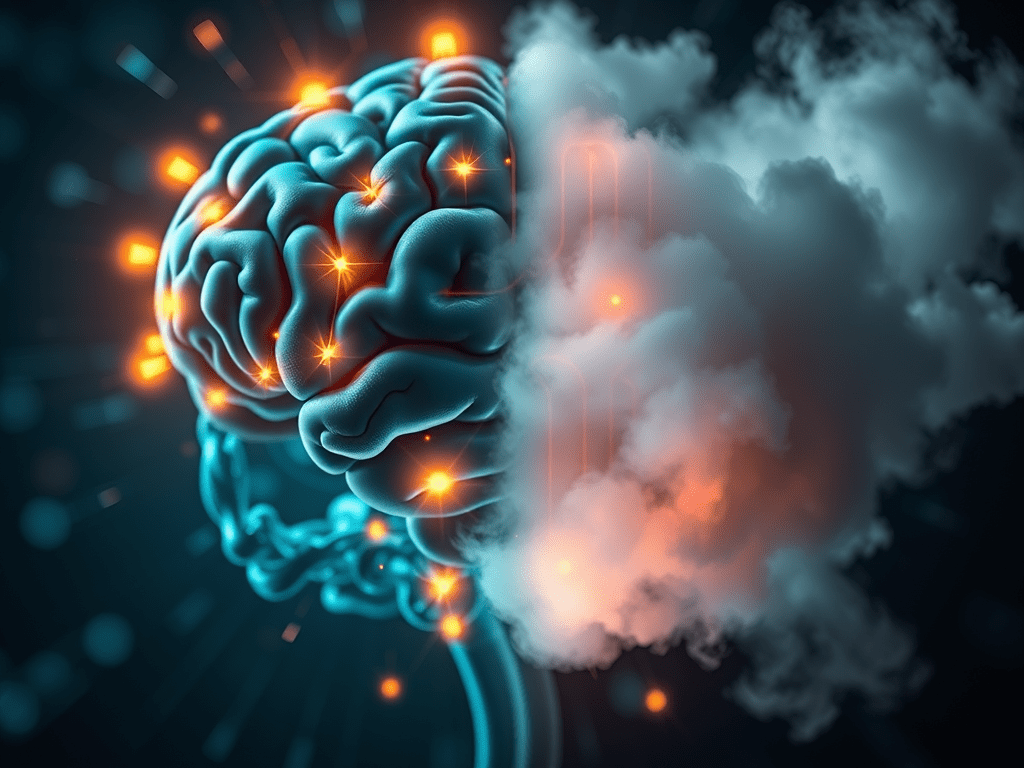
There is a moment many people reach where stress stops feeling abstract.
It is no longer just worry, pressure, or emotional strain. Instead, it becomes something lived in the body: an unrelenting heaviness, an exhaustion that sleep does not touch, sudden physical symptoms with no obvious cause, and a sense that the body itself has turned uncooperative.
This experience is often misunderstood—by others and by the person living through it. Yet it follows a recognizable biological pattern. Stress, when prolonged and unresolved, reorganizes the body’s hormonal and nervous systems in ways that make recovery increasingly difficult.
This is the hormonal burnout loop.
Stress Is a Biological Signal, Not a Mental Weakness
The human stress response evolved to manage short-term threats. When danger appears, the brain activates a tightly coordinated system involving the hypothalamus, pituitary gland, adrenal glands, and autonomic nervous system.
This system rapidly releases hormones designed to:
- Mobilize energy
- Suppress non-essential processes
- Heighten awareness
- Prioritize survival
In ancestral environments, this response ended when the danger passed. Today, psychological stressors rarely resolve cleanly. Deadlines, financial instability, caregiving pressure, social tension, uncertainty, and emotional suppression accumulate—activating the same pathways without offering biological closure.
The body responds as it always has. The cost emerges over time.
Cortisol: From Protector to Problem
Cortisol is not inherently harmful. It regulates blood sugar, inflammation, immune activity, blood pressure, and circadian rhythm. Without it, survival is impossible.
The issue is chronic activation.
With ongoing stress exposure:
- Cortisol release becomes frequent rather than rhythmic
- Receptors adapt by becoming less responsive
- Feedback loops weaken
- Recovery signaling fades
This creates a paradox where cortisol may be present, yet function poorly. People feel exhausted despite being biologically “stimulated,” alert at night but drained in the morning, and sensitive to stress far beyond what once felt manageable.
Importantly, standard blood tests often fail to capture this dysfunction.
Why Hormonal Burnout Is Rarely One Hormone
Burnout does not occur in isolation within the adrenal glands. It spreads across systems.
Metabolic Disruption
Chronic cortisol exposure interferes with insulin sensitivity. Energy becomes less efficiently distributed, leading to crashes, cravings, and unstable blood sugar sensations—even in individuals without diabetes.
Thyroid Adaptation
Under prolonged stress, the body subtly shifts thyroid signaling to conserve energy. This does not always register as clinical hypothyroidism, yet it affects temperature regulation, motivation, digestion, and cognitive clarity.
Reproductive Hormone Suppression
Sex hormones are not essential for immediate survival. During prolonged stress, their production and signaling decline—affecting mood resilience, sleep quality, and emotional stability.
Nervous System Lock-In
The autonomic nervous system remains biased toward sympathetic dominance. Even during rest, the body does not fully disengage from vigilance.
Each adjustment reinforces the others. Over time, the system stabilizes—but at a depleted level.
The Physical Symptoms That Follow
This hormonal cascade explains why burnout frequently presents with symptoms that feel “medical,” yet remain difficult to diagnose:
- Persistent fatigue unrelated to exertion
- Muscle weakness or unexplained pain
- Digestive irregularities or food sensitivity
- Lightheadedness or pressure changes
- Brain fog and memory lapses
- Emotional volatility without clear triggers
- Heightened startle response or sensory sensitivity
These are not psychosomatic phenomena. They reflect altered regulation within the neuroendocrine system.
Why Rest Alone Stops Working
One of the most frustrating aspects of hormonal burnout is that familiar recovery strategies fail.
Sleep becomes shallow or fragmented. Vacations provide brief relief, followed by rapid regression. Days off no longer restore energy. Exercise may worsen exhaustion instead of relieving it.
This occurs because the body no longer interprets rest as safety.
The system is not fatigued in the conventional sense—it is stuck in protective mode.
The Myth of Resilience and the Cost of Pushing Through
Modern culture often frames burnout as a lack of resilience. This framing ignores biology.
Continuing to push through stress signals teaches the nervous system that threat remains present. Each attempt to override symptoms reinforces the very loop that maintains them.
Willpower cannot recalibrate hormone receptors. Positivity cannot re-establish circadian signaling. Productivity cannot replace physiological repair.
Understanding this often marks the first real turning point toward recovery.
Exit From Survival Mode Is a Signaling Process
Recovery from hormonal burnout does not come from forceful intervention. It comes from consistent safety signaling.
The body must relearn that:
- Threat has resolved
- Resources are sufficient
- Activation is no longer required
This happens gradually, through stability rather than intensity. Recovery often feels slow because biological recalibration takes time—not because failure persists.
Why This Understanding Matters
Many people cycle through specialists, tests, and self-blame without ever receiving a coherent explanation for their experience. Naming the hormonal burnout loop provides context, validation, and direction.
It reframes symptoms from personal inadequacy to adaptive response pushed beyond its limits.
That shift alone can reduce stress load.
Conclusion
Burnout is not collapse.
It is an organism that adapted too well for too long.
When stress becomes physical, the solution begins with understanding—not judgment, optimization, or pressure. The body does not need to be conquered. It needs permission to stand down.
That permission is biological, not emotional.
Read More from CURIANIC
- Burnout vs. Deep Fatigue: What Modern Wellness Often Misses
- Tired But Wired: How Cortisol Imbalance Is Wrecking Your Sleep and Focus
- The Mental Load No One Talks About: How Decision Fatigue Is Stealing Your Energy
- Invisible Inflammation: The Hidden Cause of Fatigue, Brain Fog, and Weight Gain
- Work Stress Is Destroying Your Sleep: How to Escape, Recover, and Take Back Your Life