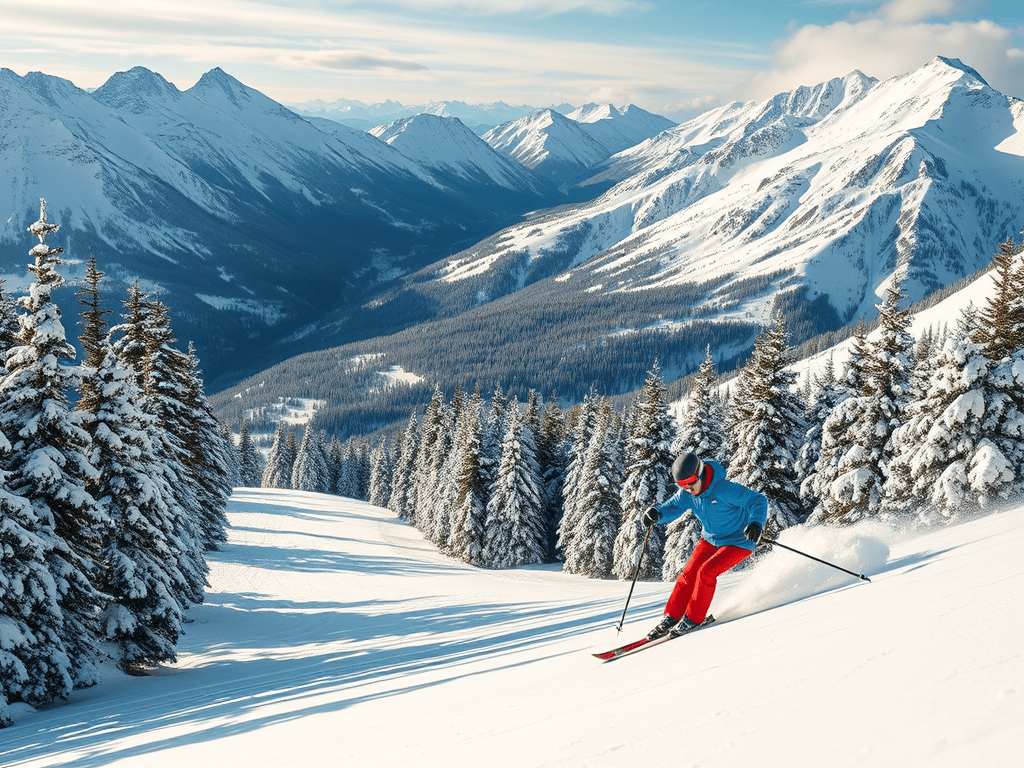
A snowy winter transforms mountains into extraordinary landscapes—but it also reveals which ski destinations are governed by discipline rather than bravado. When snowfall intensifies and weather becomes unstable, skiing ceases to be a matter of excitement alone. It becomes a test of infrastructure, patrol authority, avalanche management, and operational restraint.
This article presents a comprehensive overview of some of the most reliably managed ski destinations in Canada and internationally, selected not for marketing appeal, but for demonstrated safety systems, terrain governance, and institutional accountability. These are resorts where storms are not exploited—they are respected.
🇨🇦 Canada: Structured Winter Skiing at Continental Scale
Canada’s ski culture is grounded in public safety regulation, trained ski patrols, and conservative operational decision-making, especially during severe winter conditions.
Québec — Eastern Canada
Mont-Tremblant — Laurentians, Québec, Canada
★★★★★
Mont-Tremblant is Québec’s most internationally standardized ski resort. Its terrain is deliberately segmented by skill level, reducing congestion and collision risk during storms. Patrol visibility is high, grooming remains consistent under heavy snowfall, and medical access is immediate. It represents large-scale skiing without sacrificing control.
Le Massif de Charlevoix — Charlevoix, Québec, Canada
★★★★☆
With some of the steepest lift-served terrain in Eastern North America, Le Massif compensates with strict access management. Slopes close rapidly when wind or visibility deteriorates, and avalanche risk is continuously reassessed. Its safety reputation is built on what it refuses to open, not on constant availability.
Mont-Sainte-Anne — Québec City Region, Québec, Canada
★★★★☆
A long history of competitive skiing informs Mont-Sainte-Anne’s operational discipline. Progressive learning zones, supervised night skiing, and predictable slope maintenance make it reliable during fluctuating winter weather, particularly for families and developing skiers.
British Columbia — Western Canada
Whistler Blackcomb — Coast Mountains, British Columbia, Canada
★★★★★
One of the most professionally managed ski resorts in the world, Whistler Blackcomb operates with extensive avalanche forecasting teams and one of the largest patrol forces globally. During storms, pre-emptive closures are common—a sign of governance maturity, not weakness.
Sun Peaks — Interior British Columbia, Canada
★★★★☆
Sun Peaks is defined by calm scale. Wide slopes, low skier aggression, and easily navigable terrain reduce accident risk in snowy conditions. It is particularly valued by cautious skiers and families who prefer predictability over intensity.
Big White — Okanagan Highlands, British Columbia, Canada
★★★★☆
Famous for operating in foggy and stormy conditions, Big White emphasizes signage clarity, controlled slope design, and consistent grooming. Visibility challenges are addressed structurally rather than ignored.
Alberta — Canadian Rockies
Lake Louise Ski Resort — Alberta, Canada
★★★★★
Operating within a national-park framework, Lake Louise is a reference point for avalanche governance and slope discipline. Snowpack testing, controlled access, and transparent communication define its safety reputation.
Banff Sunshine Village — Alberta, Canada
★★★★☆
High-altitude snow reliability combined with conservative opening policies makes Sunshine Village dependable during prolonged storm cycles.
International Ski Destinations Where Safety Is Institutionally Enforced
These regions are included because safety there is legally anchored and culturally enforced, not optional.
🇨🇭 Switzerland — Precision, Accountability, Control
Zermatt — Valais, Switzerland
★★★★★
A car-free alpine resort operating beneath the Matterhorn, Zermatt is governed by strict liability standards. Glacier monitoring, avalanche zoning, and disciplined slope access define its operations.
Verbier — Valais, Switzerland
★★★★☆
While challenging, Verbier enforces clear boundaries between groomed terrain and off-piste areas. Risk is acknowledged, marked, and regulated—never normalized.
St. Moritz — Engadin Valley, Switzerland
★★★★★
One of the most institutionalized resorts in Europe, St. Moritz pairs luxury with exceptionally strict slope regulation and patrol authority.
🇫🇷 France — The Alps at Scale with Enforcement
Courchevel — Savoie, French Alps, France
★★★★★
Part of the Three Valleys, Courchevel combines high-density infrastructure with rigorous slope maintenance, professional patrols, and controlled skier flow.
Val d’Isère — Savoie, French Alps, France
★★★★★
Rooted in competitive skiing culture, Val d’Isère emphasizes avalanche control and disciplined access to high-alpine terrain.
Les Arcs — Savoie, French Alps, France
★★★★☆
Altitude-zoned terrain and strong signage systems make Les Arcs reliable during heavy snow and whiteout conditions.
🇦🇹 Austria — Visibility, Discipline, Order
St. Anton am Arlberg — Tyrol, Austria
★★★★☆
Advanced terrain is balanced by strict enforcement and highly visible patrol systems.
Kitzbühel — Tyrol, Austria
★★★★★
Despite global fame, Kitzbühel maintains remarkable slope order, making it one of Europe’s most controlled major resorts.
🇺🇸 United States — Infrastructure-Driven Safety
Aspen Snowmass — Colorado, United States
★★★★★
Extensive patrol networks and clear zoning across multiple mountains define Aspen’s safety culture.
Vail — Colorado, United States
★★★★★
Vail’s scale is supported by infrastructure density and controlled skier distribution.
Park City Mountain — Utah, United States
★★★★☆
One of the largest ski areas in the U.S., managed through aggressive signage, patrol presence, and terrain clarity.
What “Safe Skiing” Means in This Article
Safety here is measured, not promised. It includes:
- Pre-emptive closures during storms
- Formal avalanche mitigation programs
- Clear signage and enforced boundaries
- High patrol-to-skier ratios
- Rapid medical access
The safest resorts are not those that stay open at all costs—but those that know when to stop.
Skiing Safely as a Beginner: Canada and International Destinations Where Structure Comes First
For beginner skiers, safety is determined far less by snow quality or mountain height than by how deliberately learning environments are designed and protected. In snowy or storm-affected winters, beginners are especially vulnerable to poor visibility, high-speed traffic, and accidental entry into advanced terrain.
The safest destinations—whether in Canada or abroad—share a common philosophy: beginners must be isolated, guided, and supported, not forced to adapt to expert-dominated slopes.
Canada: Structured Learning in a Regulated Winter Environment
In Canada, beginner safety is reinforced by strong patrol culture and conservative mountain operations.
- Mont Orford — Québec, Canada ★★★★☆
A compact resort with clearly separated beginner zones, strong signage, and visible patrol presence. Its layout minimizes confusion during snowfall. - Mont-Sainte-Anne — Québec, Canada ★★★★☆
Progressive terrain design and supervised operations make it reliable for beginners, including during reduced visibility and night skiing. - Blue Mountain — Ontario, Canada ★★★★☆
Short, controlled runs and strict speed enforcement create a safe entry point for first-time skiers. - Sun Peaks — British Columbia, Canada ★★★★★
One of the safest large resorts for beginners in North America, with wide slopes, low congestion, and consistent patrol coverage. - Big White — British Columbia, Canada ★★★★☆
Effective wayfinding and village-centered access reduce the risk of entering advanced terrain during storms or fog.
Internationally: Beginner Safety Through Enforcement and Design
Learning to ski abroad introduces additional challenges—language differences, unfamiliar slope markings, and varied snow conditions. The safest international destinations are those that compensate for these variables through strict structure and visibility.
- Zermatt — Switzerland ★★★★★
A highly regulated, car-free alpine resort where beginner zones are clearly designated and separated, even near high-alpine terrain. - Courchevel — France ★★★★★
Exceptional beginner infrastructure with wide, protected green and blue runs and clear signage, even during heavy snowfall. - Les Arcs — France ★★★★☆
Altitude-based zoning keeps beginners concentrated in clearly defined areas, reducing exposure to expert traffic. - Kitzbühel — Austria ★★★★☆
Strong alpine discipline, visible patrol enforcement, and well-controlled beginner slopes despite international popularity. - Aspen Snowmass — United States ★★★★★
Multi-mountain layout allows beginners to remain within protected learning zones, supported by dense patrol and instructor presence.
What Beginners Should Prioritize Anywhere
Regardless of country, beginners should prioritize destinations that offer:
- Physically separated beginner-only zones
- Wide, low-gradient slopes with clear sightlines
- Strong, visible signage during snowfall
- Easy access to instructors and patrol services
- Operational restraint during storms
The most responsible resorts are those designed to absorb mistakes without consequences.
Editorial Perspective
For beginners, skiing should be an exercise in confidence—not endurance or self-defense.
The right destination is not the one with the most prestige, but the one with systems built to protect learning curves.
Safe beginnings are what sustain long-term participation in winter sports.
Conclusion
Snowy winters define ski culture—but institutional discipline defines safe skiing.
Choosing where to ski is a decision about systems, governance, and accountability, not adrenaline.
These destinations represent skiing at its most responsible, resilient, and enduring.
Read More from CURIANIC
- Winter Traditions Around the World: How Cultures Find Warmth in the Cold
- Canada in Autumn: Maples, Érables, Forests, and the Golden Journey Across the Nation
- Top Tourist Destinations with Hidden Risks for Women and Families (2025 Guide)
- Floating Homes, Moving Wheels, and Mountain Retreats: How Alternative Living Became Both Survival and Luxury