Saving vs. Mortgage: What No One Clearly Tells You
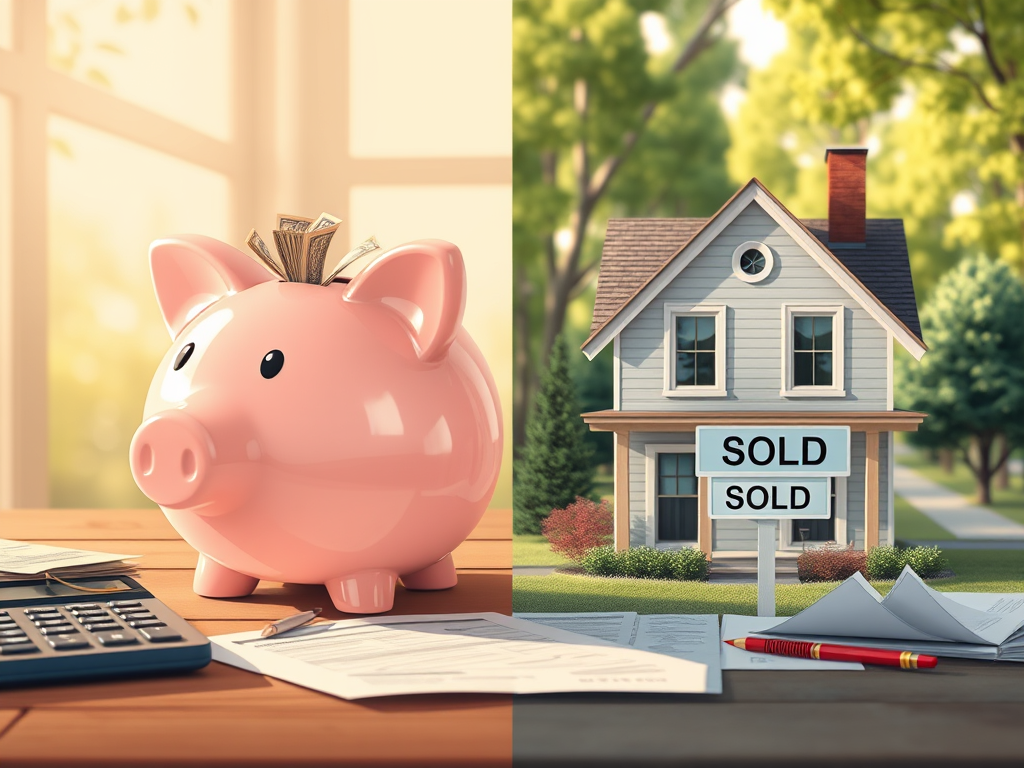
The debate between saving money and taking a mortgage is often presented in overly simplified terms.
“Saving is safe.”
“Buying builds wealth.”
Both statements are incomplete.
In reality, each path carries structural risks that are rarely explained clearly—especially when it comes to long-term mortgages.
Understanding these risks is not optional.
It is essential for protecting your financial future.
The Reality of Saving: Safe, But Slowly Losing Power
Saving provides control. Liquidity. Psychological comfort.
But over long periods, saving alone can quietly work against you.
- Inflation reduces purchasing power year after year
- Property prices often rise faster than savings growth
- The longer you wait, the larger the required down payment becomes
What feels like discipline can become delayed entry into an increasingly expensive market.
Saving protects you in the short term—but may weaken your position in the long term if used alone.
The Mortgage Illusion: Ownership at What Cost?
A mortgage is widely marketed as a path to stability and wealth.
But this narrative often hides the full financial reality.
A long-term mortgage is not just a loan.
It is a multi-decade financial commitment under uncertainty.
1. The True Cost of Interest
Over 25–30 years, you may pay tens or even hundreds of thousands more than the property’s original price.
What appears as “affordable monthly payments” can translate into a significantly inflated total cost.
2. Interest Rate Risk
Many buyers focus only on current rates.
But mortgages are exposed to renewal risk.
- Payments can increase significantly after a few years
- Financial stability today does not guarantee stability tomorrow
- A small rate increase can have a large long-term impact
This creates a hidden vulnerability:
You commit long-term, but your conditions are short-term.
3. The Down Payment Trap
The down payment is often seen as a milestone.
In reality, it is also a capital lock-in risk.
- Large amounts of cash become illiquid
- That money could have been invested elsewhere
- If the property underperforms or declines, your capital is exposed
This is not just an entry cost—it is a concentration of financial risk.
4. Ownership Is Not the End of Costs
Owning a home does not eliminate expenses—it transforms them.
- Property taxes
- Maintenance and repairs
- Insurance
- Unexpected structural issues
Unlike rent, these costs are unpredictable and entirely your responsibility.
5. Reduced Flexibility
A mortgage ties you to a location and a financial structure.
- Selling is not always easy or profitable
- Market timing can work against you
- Life changes (career, health, family) become harder to manage
Ownership increases stability—but reduces adaptability.
The Most Dangerous Mistake: Overcommitting
The biggest financial risk is not choosing between saving or a mortgage.
It is overcommitting to a mortgage too early or too aggressively.
This often happens when:
- Buyers stretch their budget to enter the market
- Decisions are driven by fear of missing out
- Monthly affordability is prioritized over long-term sustainability
A mortgage should never place you in a position where one unexpected event destabilizes everything.
So What Is the Smartest Strategy?
The strongest approach is neither “save forever” nor “buy as soon as possible.”
It is a structured, protective strategy.
The Strategy: Controlled Entry and Financial Protection
1. Build Strategic Savings (Not Endless Saving)
Save with a purpose—not indefinitely.
- Down payment (targeted, realistic)
- Emergency fund (minimum 3–6 months of expenses)
This creates a safety layer before entering the market.
2. Buy Below Your Maximum Capacity
This is the most critical rule.
Do not buy what the bank approves.
Buy what remains sustainable under stress.
- Consider future rate increases
- Leave margin for unexpected costs
- Avoid “perfect house” emotional decisions
3. Treat the Mortgage as a Risk Tool, Not a Goal
A mortgage is not success.
It is a financial instrument that must be managed carefully.
- Choose terms that allow flexibility (prepayments, refinancing options)
- Avoid locking into structures you do not fully understand
- Reassess regularly
4. Maintain Liquidity After Purchase
Do not exhaust all savings in the down payment.
Liquidity protects you from:
- Job changes
- Repairs
- Economic shifts
Owning a home without liquidity is a fragile position.
5. Think in Scenarios, Not Optimism
Plan for:
- Higher interest rates
- Temporary income loss
- Unexpected expenses
If your plan survives these scenarios, it is strong.
Conclusion
Saving alone will not build ownership.
A mortgage alone will not guarantee stability.
The real difference lies in how and when each is used.
The goal is not to “buy a house.”
The goal is to remain financially stable after buying it.
A well-timed purchase, supported by disciplined saving and conservative planning, creates resilience.
Anything else—whether endless saving or aggressive borrowing—introduces risk.
Read More from CURIANIC
- Why Buying a House in Québec, Canada Has Become a Structural Risk Calculation — Not an Ownership Dream
- Buying or Renting a Home Worldwide: The Complete Guide for Locals and Foreign Buyers
- Floating Homes, Moving Wheels, and Mountain Retreats: How Alternative Living Became Both Survival and Luxury
- Luxury or Burden? The True Cost of Pools, Terraces, Fireplaces, and Saunas in Modern Homes