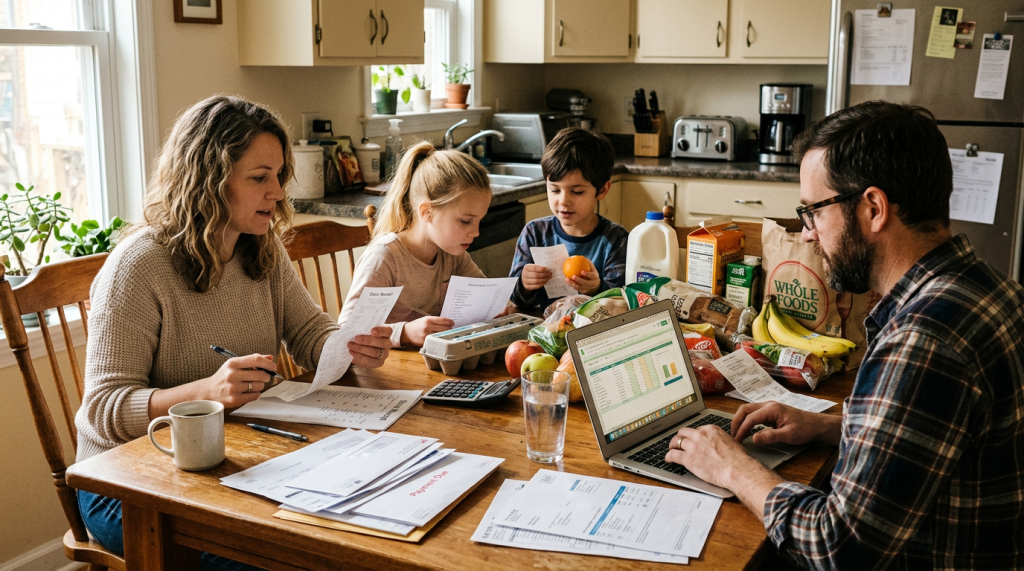
For many families around the world, rising prices are no longer viewed as temporary economic fluctuations or distant financial statistics discussed in the news. The cost of living crisis has gradually become part of daily life itself, influencing how people eat, sleep, work, socialize, raise children, and plan for the future.
What was once considered an economic issue is increasingly becoming a lifestyle, health, and social issue at the same time.
Behind every increase in rent, groceries, transportation, electricity, insurance, fuel, childcare, and healthcare lies a chain reaction that slowly reshapes the structure of family life. The effects often begin quietly through small adjustments: fewer outings, stricter budgets, postponed purchases, reduced savings, and constant calculations before making ordinary decisions.
Over time, these adjustments stop feeling temporary. They become a new reality.
Housing is one of the areas where the pressure is most visible. In many cities, rent and mortgage costs now consume such a large portion of household income that families are forced to reduce spending in almost every other area of life. Some move into smaller homes, relocate farther from work, delay buying property, or remain in unstable housing situations for years longer than expected.
But housing pressure affects more than finances alone. A home represents security, comfort, stability, and emotional peace. When families begin living with constant fear of rising rent, unexpected expenses, or financial instability, stress quietly becomes part of the household environment.
Food has also become one of the clearest indicators of how economic pressure changes daily living. Many households are no longer shopping based on nutrition, quality, or preference, but on affordability and survival. Fresh ingredients, healthier meals, and balanced diets often become more difficult to maintain consistently as grocery prices continue to rise.
As a result, cheaper processed foods frequently replace healthier alternatives because they are easier to afford and stretch further across multiple meals. While this may help families manage short-term budgets, the long-term consequences can be significant. Nutrition affects energy levels, immunity, concentration, emotional stability, and overall health. Over time, poor dietary habits linked to financial pressure may contribute to chronic illness, fatigue, and declining wellbeing.
The emotional impact of rising living costs can be just as serious as the financial burden itself.
Many families now live under continuous low-grade stress. Parents worry about bills, debt, childcare costs, future uncertainty, and maintaining stability for their children. Even households with full-time employment may feel trapped between stagnant income and rapidly increasing expenses.
Financial pressure rarely stays confined to bank accounts. It enters conversations, relationships, sleep patterns, emotional wellbeing, and daily routines. Couples may experience growing tension over budgeting and responsibilities. Individuals working longer hours to keep up with expenses may become emotionally exhausted, physically drained, and disconnected from family life.
Children are also affected by these changes, even when adults attempt to shield them from financial realities. They notice reduced activities, fewer outings, emotional tension at home, and shifts in routine. Over time, growing up in an environment shaped by constant financial anxiety can influence a child’s emotional security and perception of stability.
At the same time, many families are sacrificing aspects of life that once supported balance and wellbeing. Vacations, hobbies, sports memberships, social gatherings, cultural activities, and even simple leisure experiences are increasingly viewed as optional luxuries rather than ordinary parts of life.
Yet these activities are not meaningless extras. They support emotional health, social connection, family bonding, and mental recovery from the pressures of work and daily responsibilities. When financial survival becomes the center of modern living, quality of life gradually begins to shrink.
Healthcare decisions are changing as well. Some individuals postpone medical appointments, dental care, therapy sessions, prescription refills, or preventative treatments because household expenses already consume most of their income. While these delays may appear manageable in the short term, they often create larger physical and emotional consequences later.
One of the most concerning aspects of the cost of living crisis is how gradually people normalize constant pressure. Stress becomes routine. Emotional exhaustion becomes ordinary. Anxiety becomes integrated into daily life. Entire societies slowly adapt to levels of financial strain that would once have been considered alarming.
Yet the long-term consequences extend far beyond individual households.
When families spend years under continuous economic pressure, societies often experience rising mental health struggles, declining wellbeing, reduced social mobility, delayed family planning, increasing inequality, and weakened community stability. Economic instability does not only affect spending habits. It changes how people experience everyday life itself.
The modern cost of living crisis is therefore not simply about inflation or expensive products. It is about the slow transformation of family life under continuous financial pressure.
And for many households, the deepest concern is no longer whether prices will continue to rise — but how much more emotional, physical, and social strain ordinary families can absorb before the effects permanently reshape the meaning of comfort, stability, and everyday living in modern society.Read More from CURIANIC
Read More from CURIANIC
- The Truth About Financial Stability: What Every Young Adult Should Know About Careers, Debt, and Building a Life That Lasts
- Worked 40 Years, Still Working: How Policy Shifts, Rising Costs, and Unbalanced Priorities Broke the Western Retirement Promise
- The Real Cost of Living Abroad: Taxes, Culture, and Surprising Price Gaps Worldwide
- Why Buying a House in Québec, Canada Has Become a Structural Risk Calculation — Not an Ownership Dream